No. 125 — Story Bibles ⫶ Computation as Architecture ⫶ Peonies in Buckets
I use the Pensieve
My name is Linda. I write a bi-weekly newsletter about computer science, childhood, and culture.
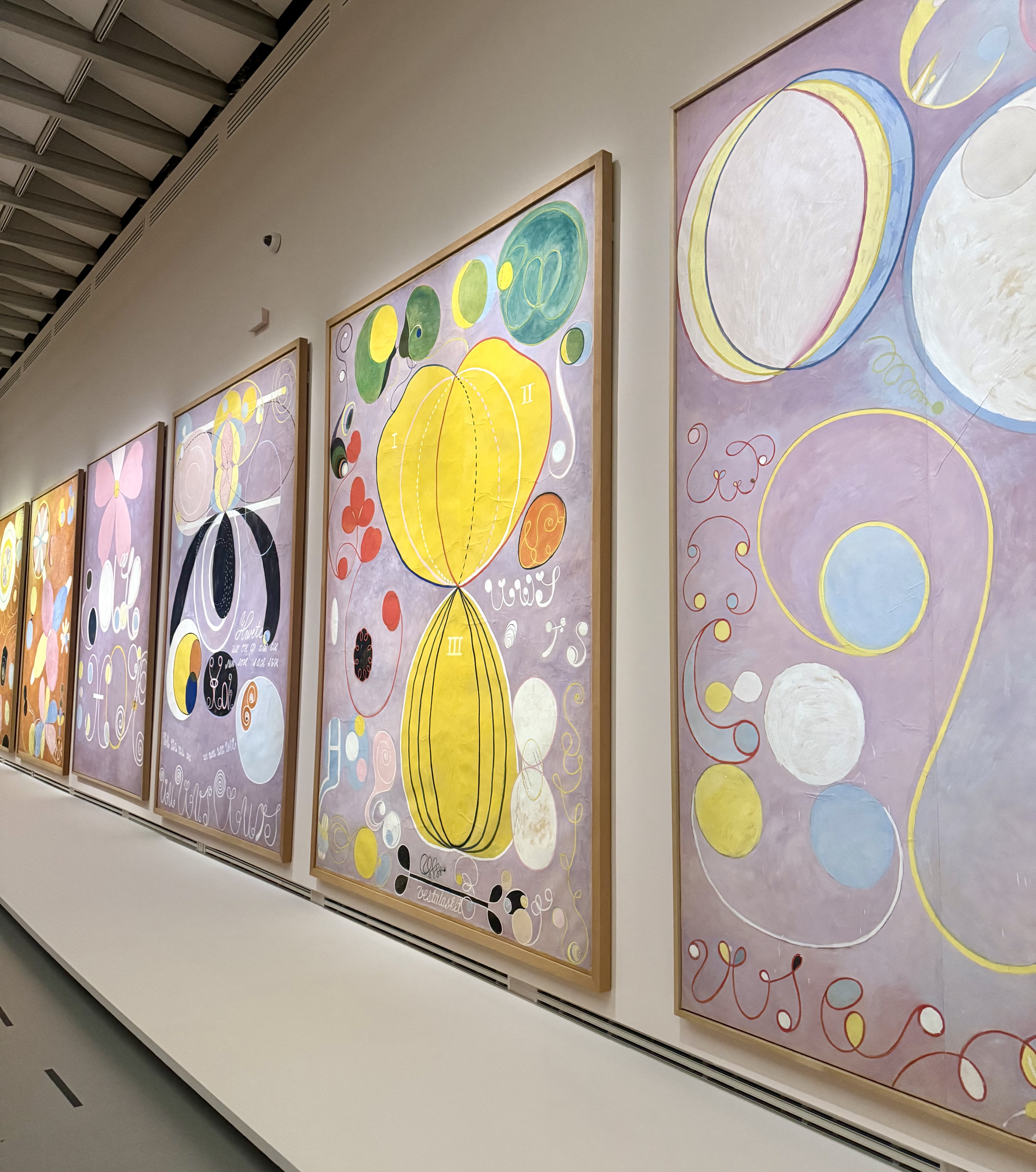
Odds and ends edition. The French have so many bank holidays in May that my weeks feel more like pauses with work in between. Hilma Af Klint is showing at Grand Palais until August 30th. It's hard to explain how majestic/mystic it was seeing these paintings live for the first time. Ten-euro buckets of peonies are back on the street corners, which feels like the Parisian version of Japan's seventy-two micro-seasons.
1.
A friend said he always buys a bottle of blanc de blancs from a champagne house he doesn't know. Another orders all the starters and sides in a restaurant and shares with the table. I head straight to the recently returned shelf of our local library for the best mix of popular and eclectic. I don't know what to call these tiny personal rules. A computer scientist would call them algorithms. Christopher Alexander would call them a pattern language. A four-year-old would call them how I do things.
2.
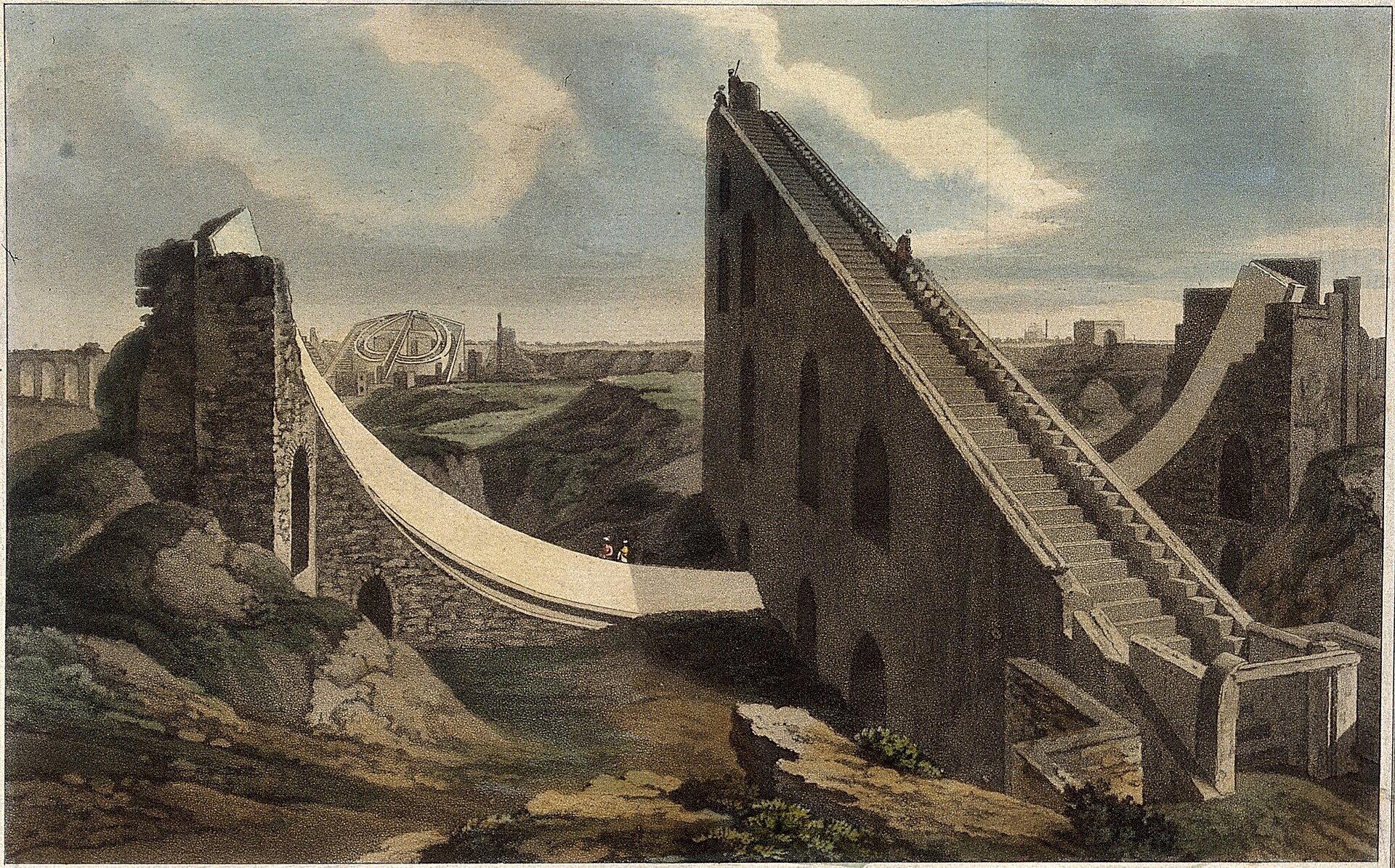
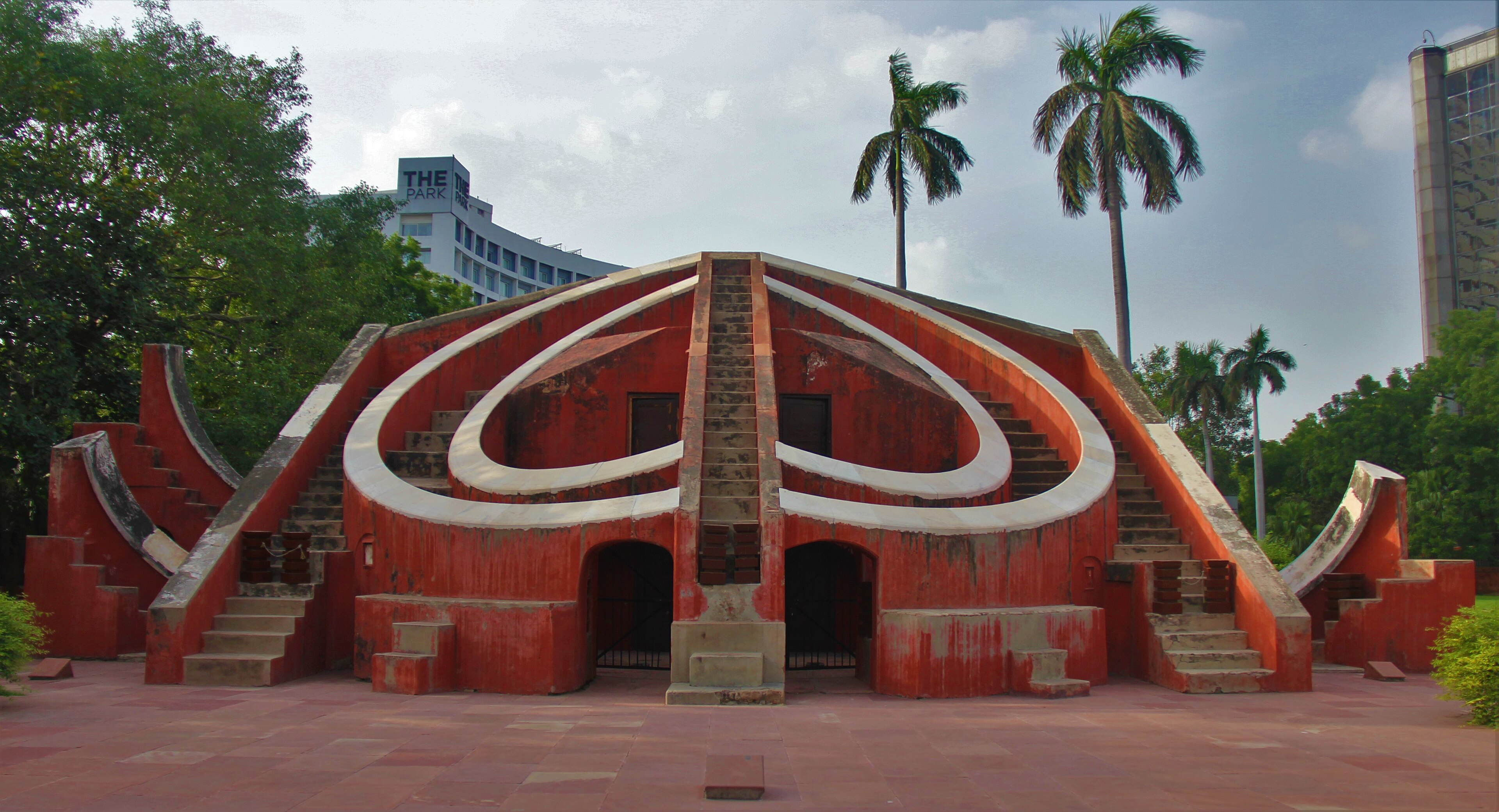
I've been writing a funding application for an ancient computers themed playground (think half-submerged abacuses in sand) and found Jantar Mantar, a seventeenth-century observatory in New Delhi. A marvel! Thirteen architectural astronomy instruments built to predict the movements of the Sun, Moon, and planets. Exactly the kind of precedent I was looking for: computation as architecture.
Here's my opening pitch:
The earliest computing devices we know of were built to read the sky, count the harvest, predict the eclipse. Computers were timekeepers before they were anything else. I want to build a playground for this.
Children meet calculating machines as archaeological finds rather than museum objects: a Sumerian abacus the size of a climbing frame, a walk-through Jacquard loom, a body-scale Antikythera mechanism two children crank together, a Babbage difference engine emerging from a dune, a quipu rope ten kids long, a water clock you can wade into. (Plus some notes to our modern computers, and room for future ones.)
Computing acquires a past, and machines that have a past can be redesigned, replaced, even refused. Children who play with ruined computers grow up able to imagine succeeding ones.
3.
My almost four-year-old and I have started a bedtime story of our own. I have always loved that both Pippi Longstocking and Harry Potter began as bedtime stories, and the little moment before sleep is my favourite part of the day.
It began with Katherine Rundell's Rooftoppers, which I have loved for years but which is still too difficult for a four-year-old. So there is now a boy, named after my son, who lives in a Paris apartment and has discovered a hidden society of children living on the rooftops — our personal fan-fiction-meets-Rundell-Cinematic-Universe. My son has set the one rule himself: it can be scary, but only "four-year-old scary," never "seven-year-old scary." In a few years it can get longer, stranger, braver.
I tell the story myself. It is improvised, and every day something new appears. There is a cat who is white in the street and sparkling pink on the roof, after something he made in art club. A boy who rescues love-locks (and the wishes inside them) from the bridges came from a family friend whose kid was obsessed with unlocking the locks. Someday the story will swim in the Seine and visit the Catacombes, where another group of children live. Vélibs, Monoprix and the giant oriental plane in Parc Monceau all make an appearance.
But a story told across years has a memory problem. By spring I will not remember what colour the important lock was, or which threads I left hanging. So I have been keeping a kind of story bible with Claude, uploading the recording of each night's telling.
I started by explaining my references: a dash of Moonbound, some Roald Dahl, the cosiness of Tove Jansson, a little of Calvino's Invisible Cities, the doorway-into-elsewhere of C.S. Lewis. Battlestar Galactica has a famous 53-page series bible. I've been fascinated by these documents since I read about Lucasfilm's continuity supervisor in 2008. That's what I asked Claude to be, keep tabs of the characters, the unresolved threads, the rules of the universe.
I've been watching people build AI storytelling tools for children ever since Quinten showed me a prototype that eventually became Tolan. Most of them slopify what should remain human. I want to tell the story myself. But because the AI remembers, the story can be longer, deeper and stranger than anything I'd manage alone.
4.
Where are the humanistic, artful, material, thoughtful essays/platforms/plays about AI in education? The hundred languages of the LLM? Trying to find something for an AI-hesitant elementary teacher and coming up empty-handed.
Decidedly not looking for: prompt-craft for educators, productivity hacks, the chatbot-as-TA. But/and, a strange new instrument has appeared, it has read everything ever written, and it would like to make something with a child. (Here is the palette! Here is the brush!)
If you've found something, reply to this email.
5.
A new section appears! I've ported all of my writing as a backup on my personal website and as a result I also have a handy folder with raw text versions of each letter. So, I did what everyone does, and poured it all into Claude. It feels a lot like Pensieve, the cauldron in Harry Potter. From Dumbledore: "I use the Pensieve. One simply siphons the excess thoughts from one's mind, pours them into the basin, and examines them at one's leisure. It becomes easier to spot patterns and links, you understand, when they are in this form."
I've had lots of fun probing and prodding my old ideas and figured I would try this resurfacing technique also here. This weeks selection is inspired by Madeleine Schirber's words and text Archives: History in Your Hands (An Illustrated Pamphlet)
How do you keep an archive alive?
No. 50 — Missing Internet ⫶ Hiding in Plain Sight ⫶ Case studies in Computing Ethics
No. 95 — Small Archives ⫶ Without Blurs ⫶ Lost Art of Logarithms
No. 122 — 25 454 Links ⫶ He Did It in French ⫶ Kompyuuta vs. Tölva
6.
Mathilde Baillet is organising NewKid Day at VivaTech on June 20th. It's a day of workshops, panels, and demos for families who want to think seriously about children and AI. I'll be running some Reggio Emilia-inspired workshops on AI and computation for kids. If you're in Paris, come say hi!