No. 96 — Sorting algorithms ⫶ Currently sitting on a pencil case ⫶ Seasonal family logistics shuffle
All sorts
My name is Linda. I write a bi-weekly newsletter about computer science, childhood, and culture.
I’m writing this in the middle of seasonal family logistics shuffle - swapping out winter boots, handing down outgrown shirts. Sometimes I feel like organizing things is half of what I do as a parent: sorting laundry, schedules, emotions.. That’s also the theme of the week here.
A lot of people have asked me in the last five years: will there ever be another Hello Ruby book? Right now, I don’t have a new one in the works. But I miss working with paper and the pacing a picture book offers and there is something stirring.
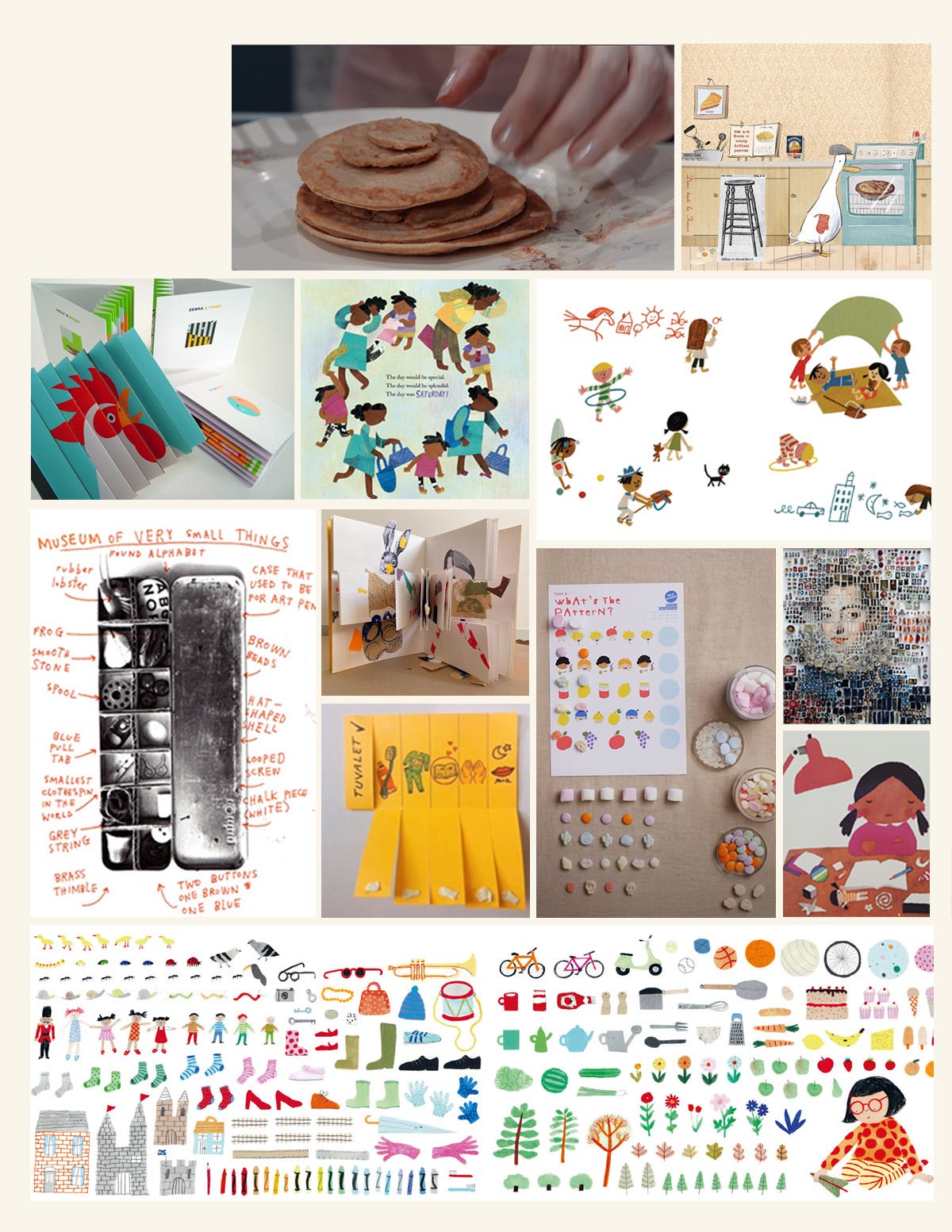
It feels somewhat vulnerable to say it aloud, because picture books take a long time to brew. Years, sometimes. And this one doesn’t yet have a shape or structure, just a moodboard. But in the reader survey’s I was asked to share more work-in-progress, so here goes..
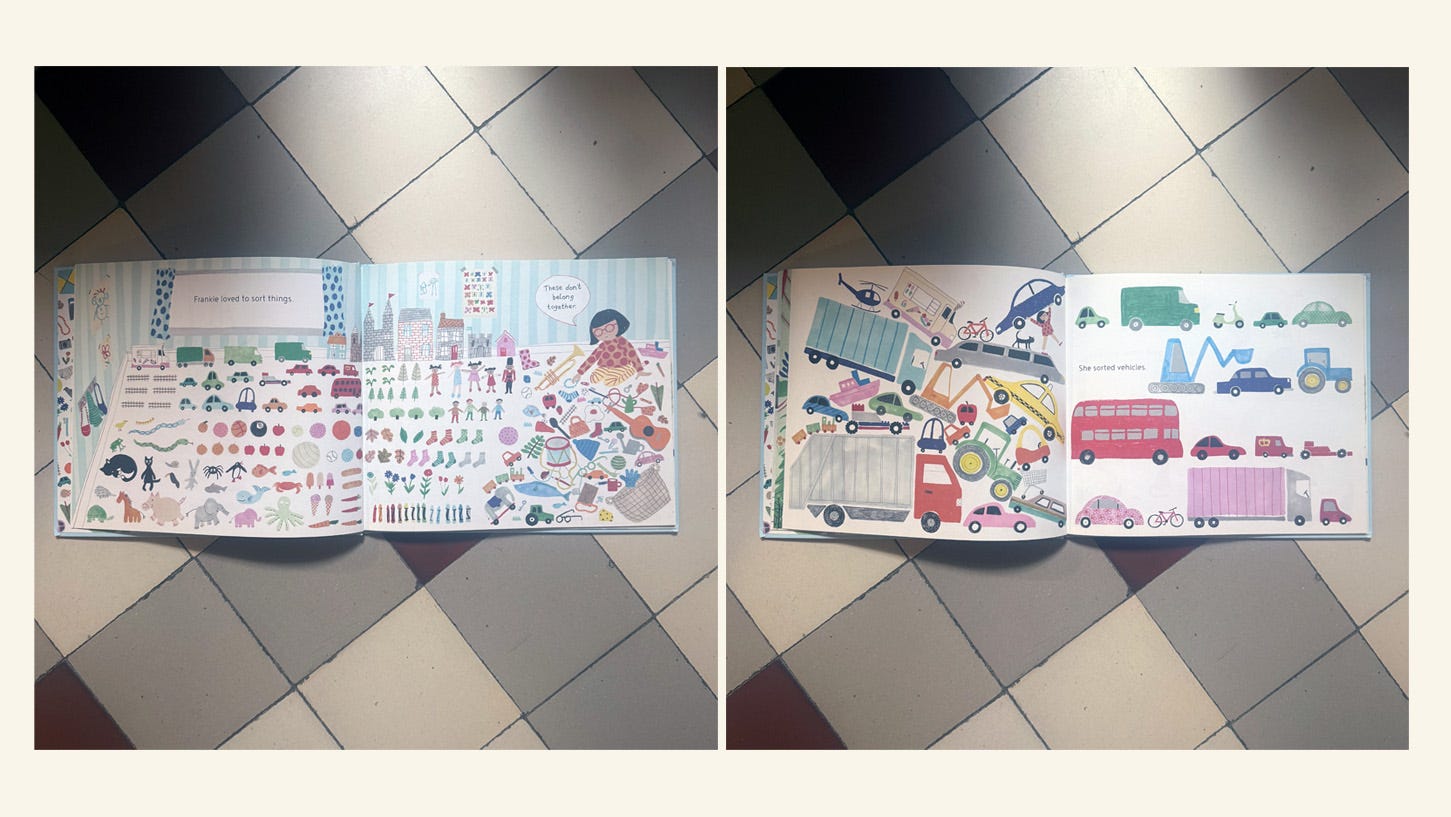
There’s a book we read almost every week called All Sorts by Pippa Goodhart. It’s beautifully illustrated and full of the sensory detail of the world - plants and toys and cars and people. It’s about a little girl named Frankie who loves to sort things in every way imaginable. The vehicles spread is a favorite in our house.
I think about this book a lot. How comforting it is to bring order to the chaos and how sorting is a natural instinct for children. I watch as my toddler goes through Montessori sorting trays, color-matching games, and tongs & tweezers activities, and I admire how sorting teaches autonomy and logic at a very early age. So that’s one component.
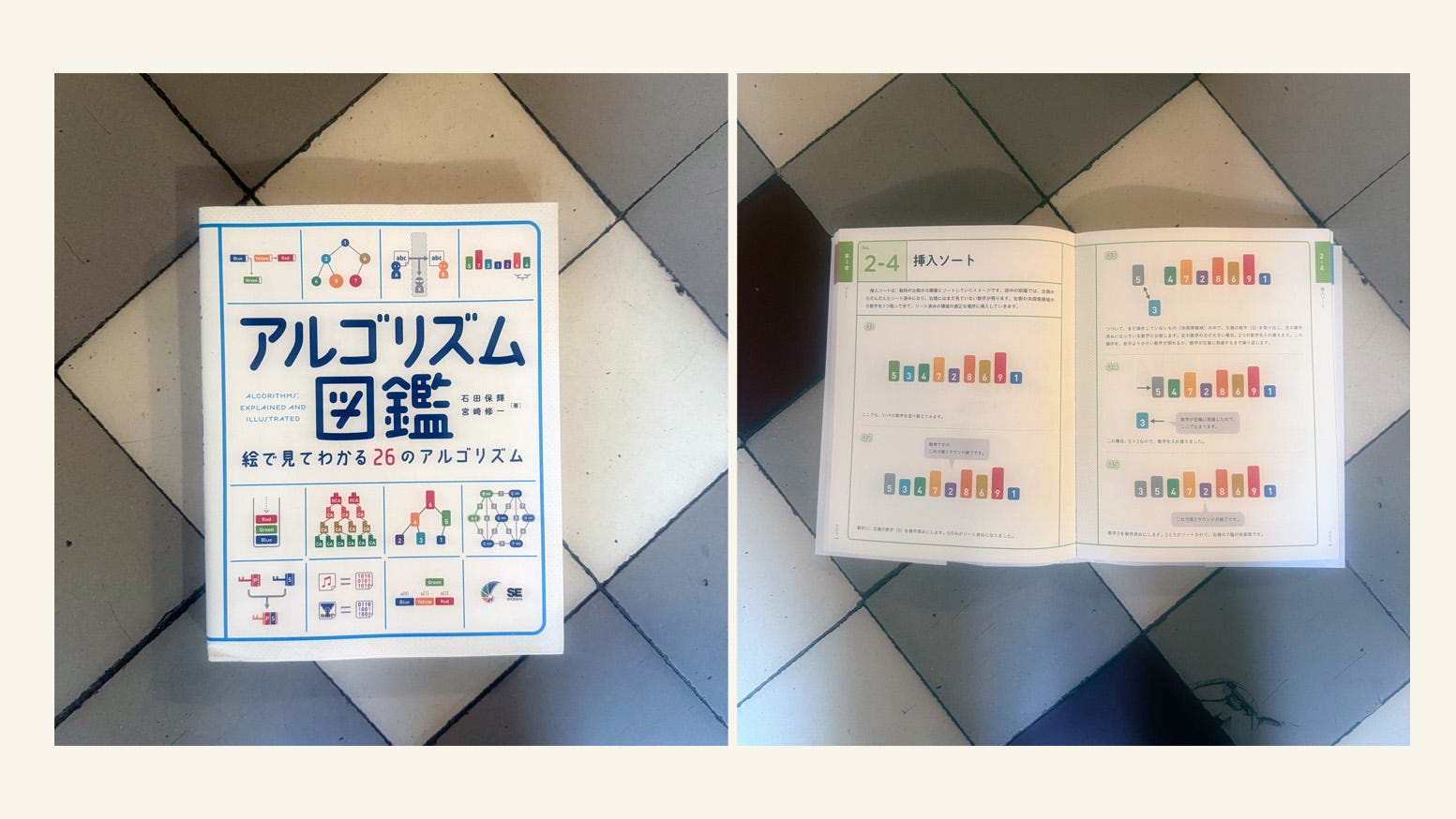
Another ingredient is a book I found while moving. I got アルゴリズム図鑑 by Yoshiki Ishida and Shuichi Miyazaki from my Japanese publisher almost ten years ago. It’s a visual guide to twenty-six different algorithms, designed in a clear, step-by-step manner reminiscent of IKEA instructions.
I think this is what I want to experiment with next: a Hello Ruby book on sorting algorithms and how they map to childhood experiences. Interactive between page turns like the best of Hervé Tullet’s work, maybe with even cut-outs or flaps. And probably with an offline, paper-based component. And I can tell drawing so many things will be a lot of fun - an feeling it’s always useful to navigate towards when starting a project.
A few references on my table right now:
ALL SORTS by Pippa Goodhart. Beautifully illustrated, tactile and deeply child-centric. Comes with an activity sheet for educators!
A PAIR OF SOCKS by Stuart J. Murphy. A classic pattern-recognition story.
PRESS HERE by Hervé Tullet. While not about sorting, the book uses interaction and pattern to convey logic.
UNDERCOVER: ONE OF THESE THINGS IS ALMOST LIKE OTHERS by Bastien Contraire and Meagan Bennett. Visual invitations to sort and categorize.
TARO GOMI’S PLAYFUL PUZZLES FOR LITTLE HANDS. Tarō Gomi is a master of categorization, comparison, and organizing the world. I love this book and it was an early reference in the Hello Ruby activities.
CS UNPLUGGED: SORTING ALGORITHMS. Great resource for teaching sorting algorithms without screens.
Moodboard from the left: Pancake sorting (me!), Gus Gordon ‘George wasn’t like most birds’, Katsumi Komagata, Saturday by Oge Mora, Another by Christian Robinson, Museum of Very Small Things, Atelier pour enfants - de l'atelier "Habille-moi, Montessorisaati, Metaphorical Portraits by Michael Mapes, What’s the pattern (me!), Taro Gomi, All Sorts by Pippa Goodhart
Linked List
Hunter computer. I’m reworking my personal website and was so inspired by this description of the website: “It is currently sitting on a pencil case, on the floor of my apartment in Amsterdam.”
Astrid Lindgren x Ilon Wikland x Jarbnö. Okay, very niche, but I love brand collaborations which are not about plastering a logo/illustration on a shirt. These yarns and knitting models look exactly right, I love little Lotta’s dress and the toy pig pattern especially. Other examples: Roald Dahl x Mini Boden and Rebecca Green x Holbein. Are there other examples I should know of? What’s a name for this type of collaboration?
“Science fiction is about strange rules, while fantasy is about special people” - Chiang’s Law
Classroom
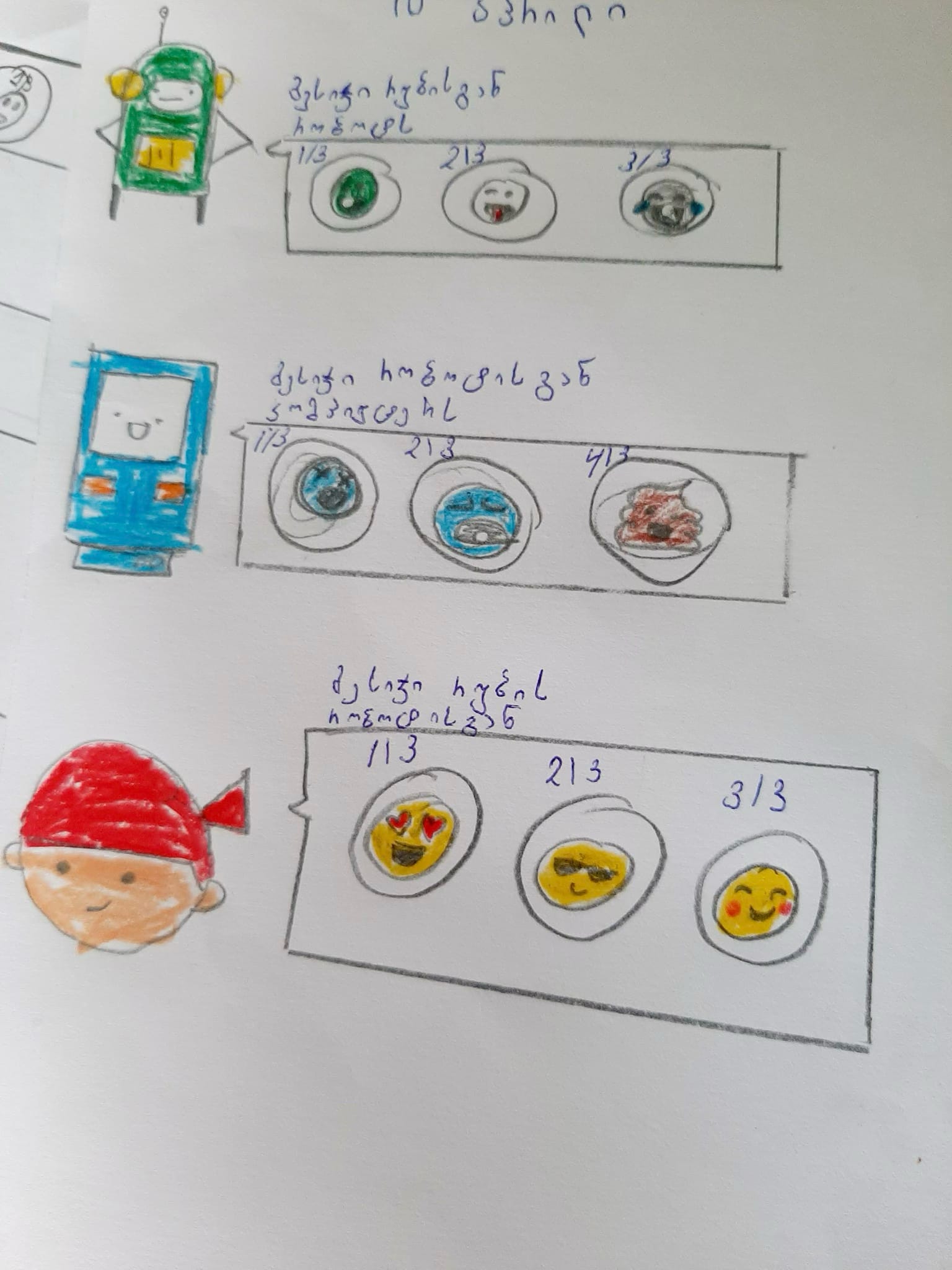
Georgian educator Nana Nozadze sent me a lot of delightful images already last summer. In her words:
“I should especially mention that in those schools where there are no computers, where every student does not have a computer, the mentioned activity and exercises allow us to present the issue in an interesting way. They are enthusiastically involved in the activities. I know very well what it means for each student even an ordinary lesson that will end up as an interesting adventure for him; I know very well because I have been teaching computed technologies for 25 years and I have worked in all kinds of classes.”
I’ll share more in upcoming letters, here a small sampling: