No. 65 - Playground abacus ⫶ Stochastic Parrot ⫶ Parallel Computing in the Ancient World
Numbers grasped between the thumb and the finger
My name is Linda. I write a bi-weekly newsletter about computer science, childhood, and culture - and 9 674 of you are listening. If you enjoy this issue, please share it with anyone who may find it helpful.
I always knew I wanted to have an abacus somehow present in the playground I’m making. Many consider devices such as the abacus or slide rules to be early computers. These ancient calculating devices offer a hands-on approach to math, aligning well with Montessori principles.
While researching the history of the abacus, I ran into a few lovely stories.
The name abacus comes from classic Greek architecture - the flat marble slab on top of a column’s capital. They made for excellent flat surfaces to write on. In the Ancient Roman Empire, abacists, often slaves, employed a unique quality control method: three slaves independently performed the same calculation, and their results were compared—a primitive form of parallel computing.

Returning to the playground design, abaci can be incorporated as panels or mounted on posts. I also looked into analog binary counters people 3D print, but it seems complicated to make a mechanism that would be durable enough.
Two directions I’m excited about are the binary roll and binary abacus.
The binary roll would give kids a sensory experience of rolling over the cylinders, and the proportions would be big enough to make it feel like an adventure. Older children could also practice forming different letters in binary form. (The rotating mechanism would be hidden behind a panel)

Another idea is to make a working binary abacus, with powers two above and a magnet mechanism to keep the marbles up and down.

Next, I’ll think about what kind of playground games, prompts, or projects one could imagine around a binary abacus and the binary roll. They could involve scavenger hunting around the playground or solving puzzles with the abaci.
I’m hoping even one little child wandering into the playground would have a profound experience of understanding the concept of binary. Further, while looking into the history of the abaci, I found this gem:
Numbers grasped between the thumb and the finger. That’s my playground slogan right there.
P.S. I’ve written about the playground project in letters No. 21 and No.36. The construction is soon starting, so there will be more to report!
Linked List
In computer science, a linked list is a linear collection of data elements whose order is not given by their physical placement in memory. But here it is a selection of things I’ve been reading lately.
The list of Physical Visualisations is a treasure trove. Look at this wearable computer (or an abacus ring) from the Qing Dynasty. The first chapter of Computing Before Computers by Ed Thelen has been super helpful in learning about different abaci.
Two New Yorker stories that have circled widely in my circles, but I still love them: Is My Toddler a Stochastic Parrot? and A Coder Considers the Waning Days of Craft. I love everything James Somners writes, and Angie Wang touches upon topics I’ve been thinking a lot about lately.
The best and only gift guide one needs for children by the ever-great The Kid Should See This.
Classroom
I’m hoping to surface and share stories from all of you and I’d love to see your creations! Here are a few teachers using Ruby in creative, fun and inspiring ways.
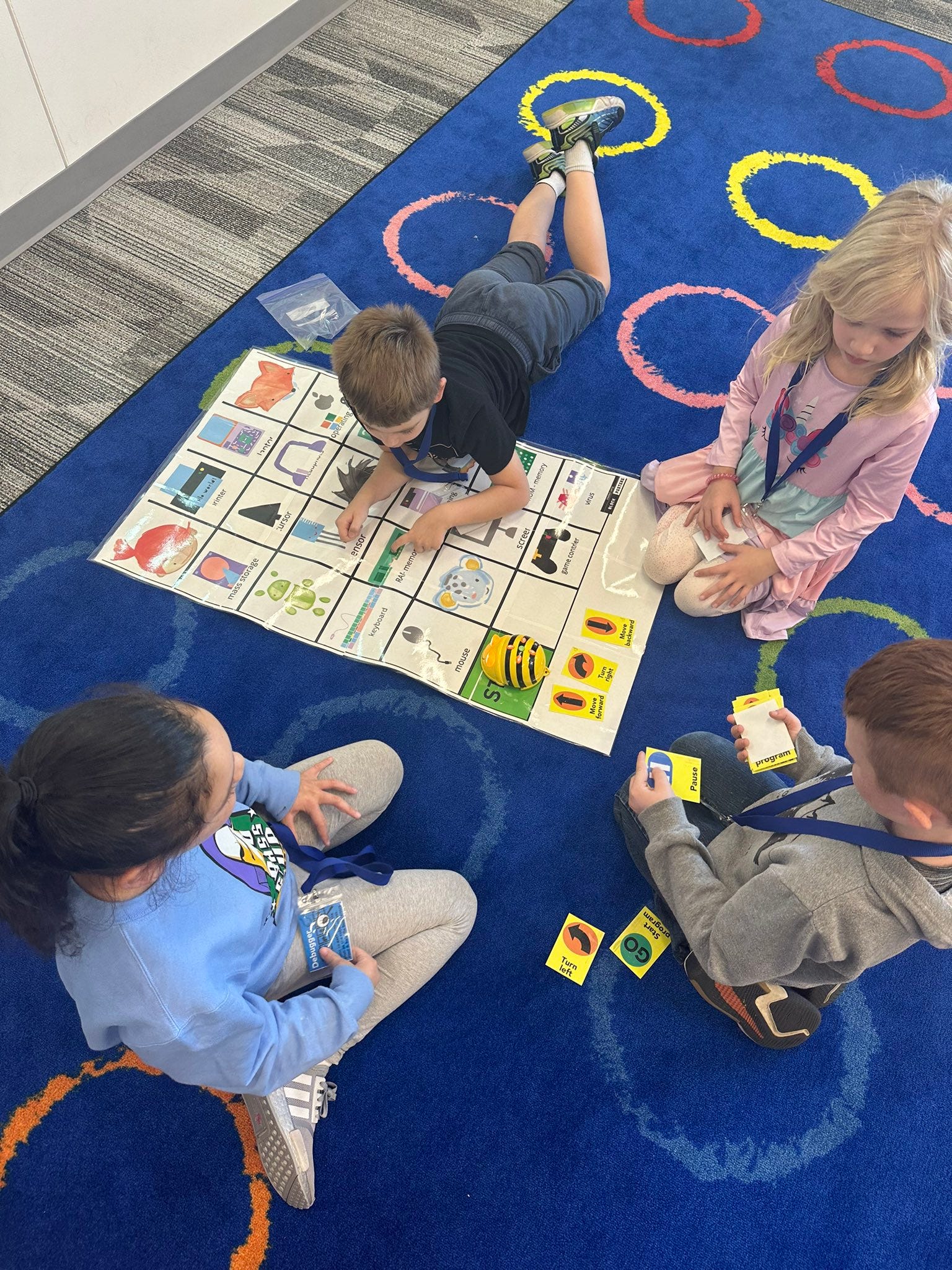
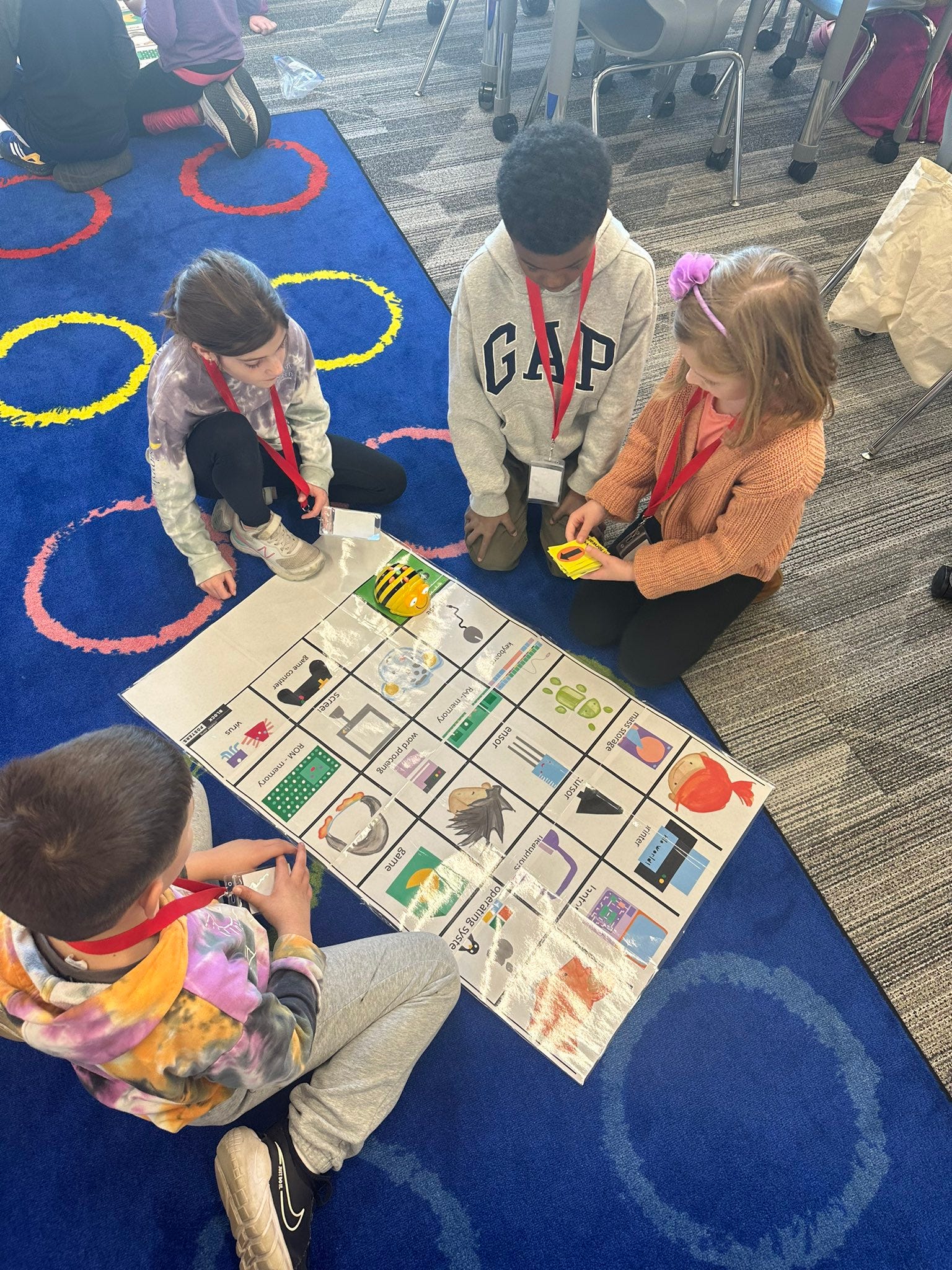
Josh Harris from Clearwater Elementary created a lovely Beebot map with the characters from the book.
“This week in Tech, 2nd graders are working on retelling Hello Ruby Journey Inside the Computer by working as a team and using their coding skills. #HelloRuby #coding“
And Amy Thomas dressed up as Ruby and her friends for Halloween, which made my holiday!
