No. 63 - Surprised by Joy ⫶ Atomic-sized person ⫶ Trip to Georgia
All I want to say is that the wonder is still there
My name is Linda. I write a bi-weekly newsletter about computer science, childhood, and culture - and there are 9 692 of you listening. If you enjoy this issue, please share it with anyone who may find it helpful.
I sometimes think everything good in my career is an echo of what I felt when, as a kid, I truly immersed myself in play.
So thought also C.S Lewis:
"I fancy that most of those who think at all have done a great deal of their thinking in the first fourteen years."
I finished his book, Surprised by Joy: The Shape of My Early Life, early last week. It's one of those books that kept popping up on the reading lists of many different people.
In Surprised by Joy, Lewis describes how he receives glimpses of something beyond his experience. It starts with a toy garden his brother brings into the nursery, continues with Beatrix Potter books, Wagner's music, and, yes, with God. The feeling of enchantment and deep focus are at the core of Joy. Joy, for Lewis, is a signpost for something outside of oneself.
I call it Joy, which is here a technical term and must be sharply distinguished both from Happiness and Pleasure. Joy (in my sense) has indeed one characteristic, and one only, in common with them; the fact that anyone who has experienced it will want it again... I doubt whether anyone who has tasted it would ever, if both were in his power, exchange it for all the pleasures in the world. But then Joy is never in our power and Pleasure often is.”
― C.S. Lewis, Surprised by Joy: The Shape of My Early Life
Many people focus on the religious aspects and christian theology of Lewis' book - and it truly is a beautiful recounting of faith.
I, however, will add the book to my canon of great books on childhood, along with Tove Jansson's Sculptor's Daughter and Roald Dahl's Boy: Tales of Childhood. All three books capture something about how it feels to be very small - when the world is enchanted and real.
Lewis' Joy is part of the same vocabulary as Jansson's mystery of winter snow in an empty house or the vastness of Christmas viewed beneath the tree. Joy has the same determination as Jansson's story about a silver stone that a very young child is rolling home.
Joy can also be something physical. Roald Dahl remembers treasures likea a magnet, a ball of string, "half a dozen lead soldiers, a box of conjuring-tricks, some tiddly-winks, a Mexican jumping bean, a catapult, some foreign stamps, a couple of stink-bombs."
Joy is also present when Dahl, in his book, writes about the longing to have a bike and to go whizzing down the hill with no hands on the handlebars.
Then he concludes:
"It made me tremble just to think about it."
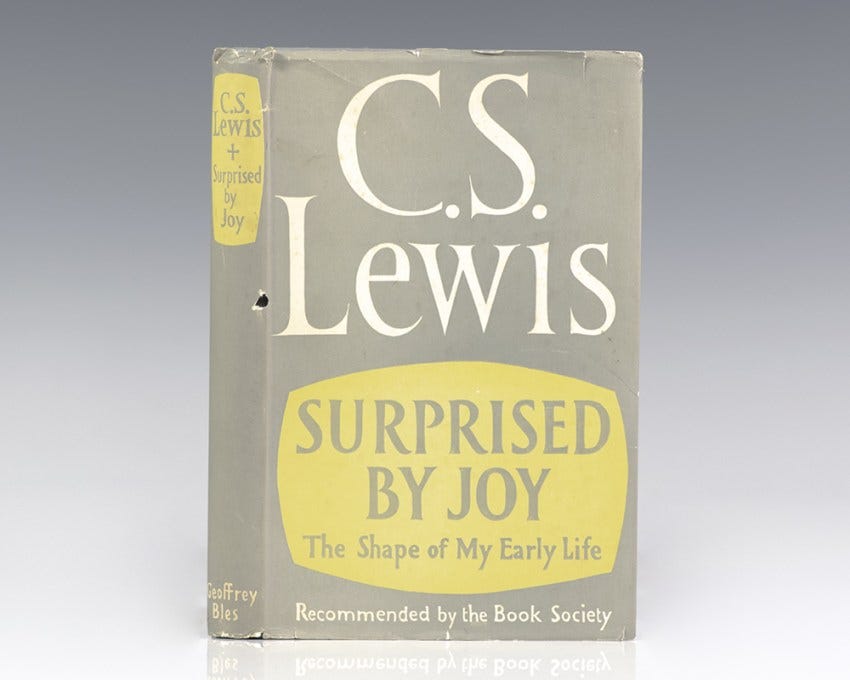
Cover picture from here. It's the first UK edition, and I love the jacket design created by John R. Biggs.
Linked List
In computer science, a linked list is a linear collection of data elements whose order is not given by their physical placement in memory. But here it is a selection of things I’ve been reading lately.
Alan Jacob's The Narnian is a lovely book on C.S Lewis. C. S Lewis's doodles are a treasure one can only find on the Internet. Lewis also led me to find G.K. Chesterton.
I Saw the Face of God in a Semiconductor Factory. This story by Virginia Heffernan on Taiwan Semiconductor Manufacturing Company was paywalled on Wired, but since it's such exquisite reporting, I wish more people could now read it. I loved this line from TSMC's chairman and former CEO, Mark Liu. "We are doing atomic constructions," Liu tells me. "I tell my engineers, 'Think like an atomic-sized person.'"
Always on the lookout for lovely paper crafts tutorials. These are so joyful and generous.
Last week, Robert Irwin passed away. Lawrence Wechsler's Seeing Is Forgetting the Name of the Thing One Sees: Over Thirty Years of Conversations with Robert Irwin is the book (really, a compass) I've purchased most copies of. Full of profound stories. His entire doctorate acceptance speech: "All I want to say is that the wonder is still there." Walks away.
Classroom
I’m hoping to surface and share stories from all of you and I’d love to see your creations! Here are a few teachers using Ruby in creative, fun and inspiring ways.
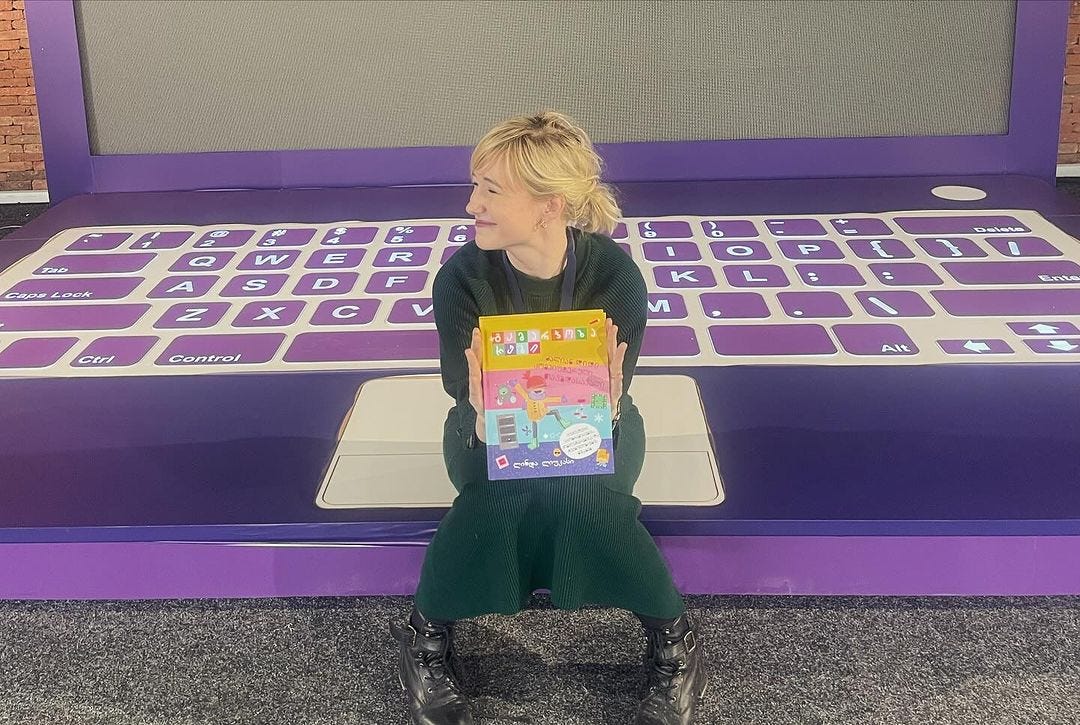
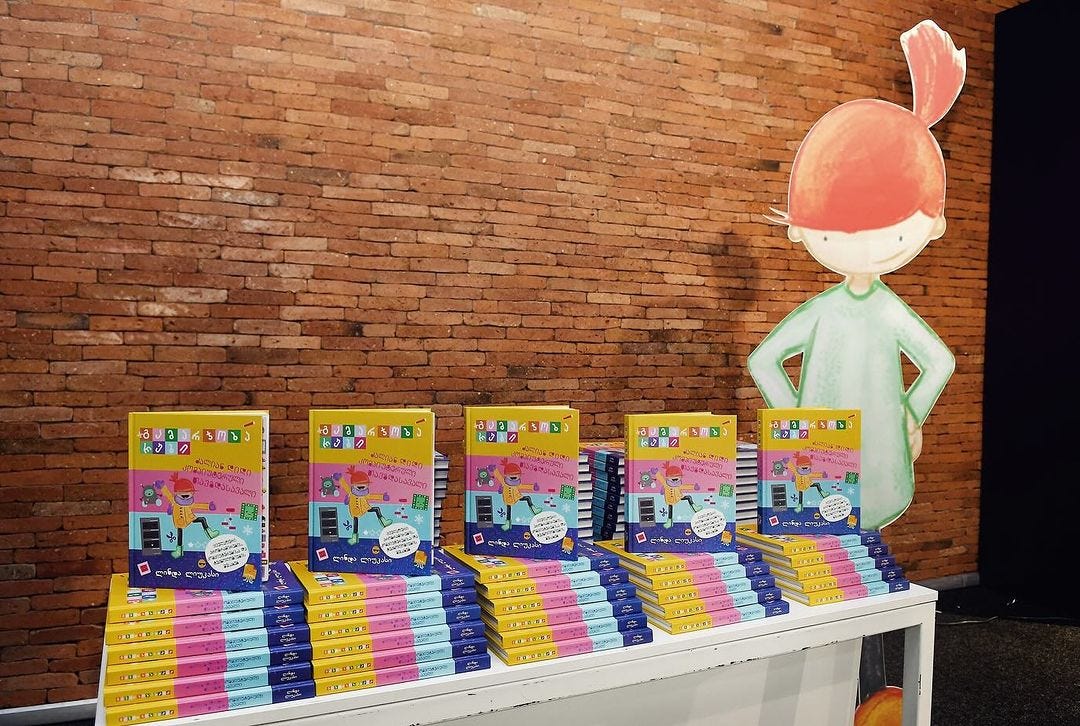
Last week, I got a chance to go back to Georgia, where all four Hello Ruby books where published in one glorious edition. I was touched by all the effort and care that went in to the events. Meeting translators, educators, parents, and policymakers was a gift.
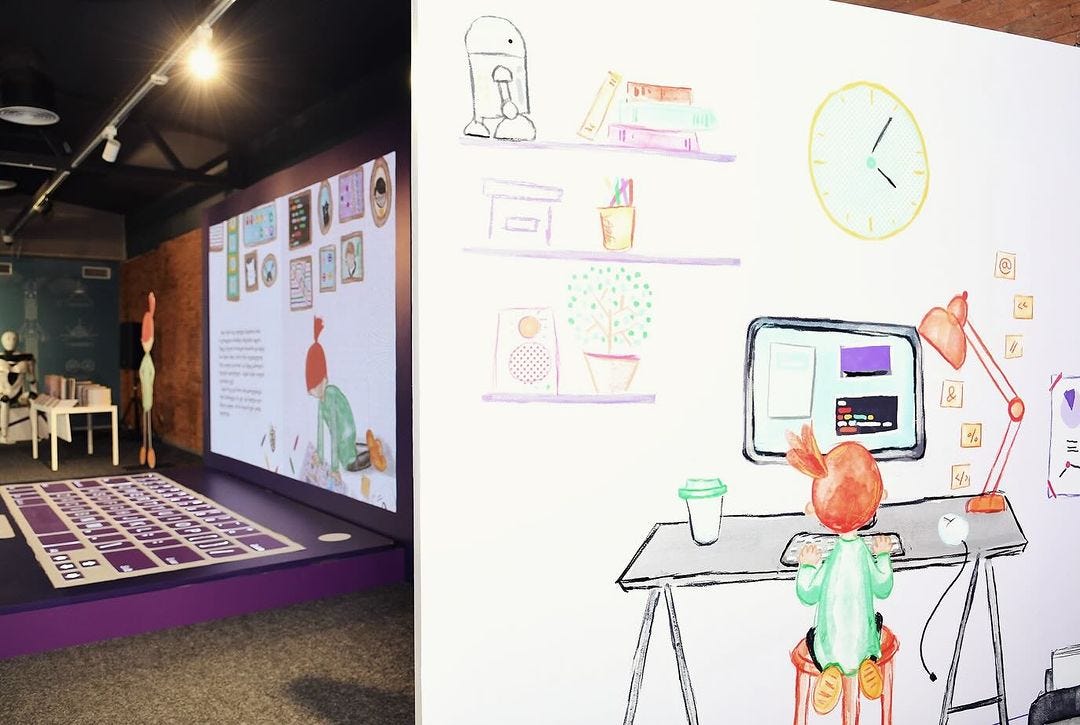
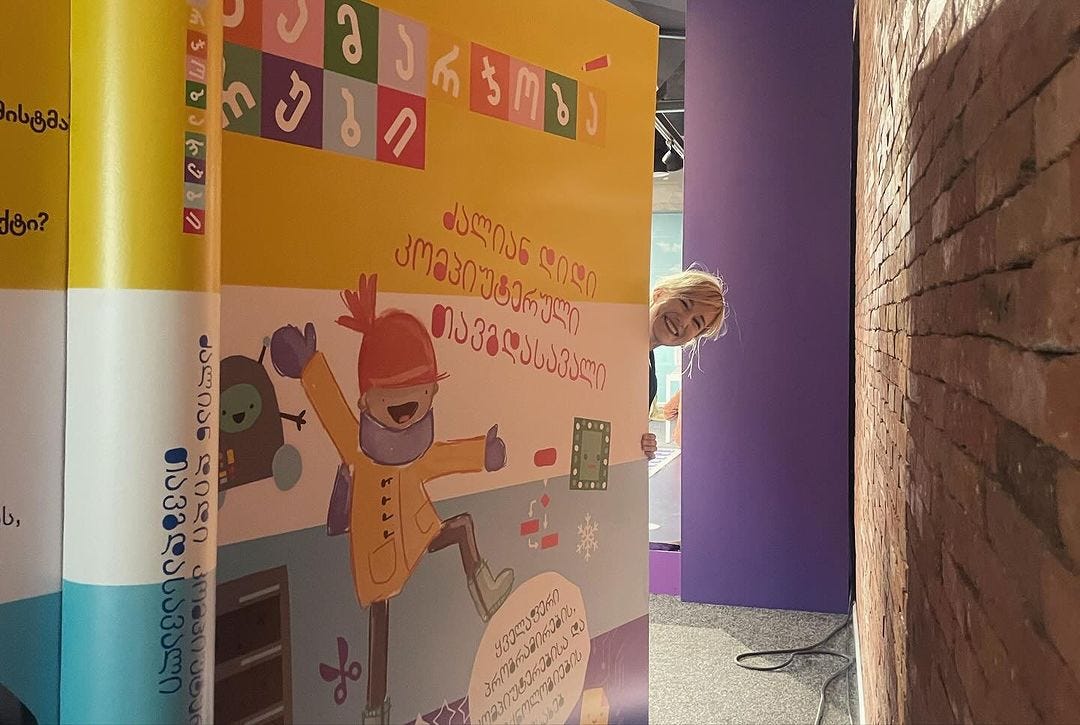
The team had built a gigantic stage that looked like a computer, along with a giant version of the book!
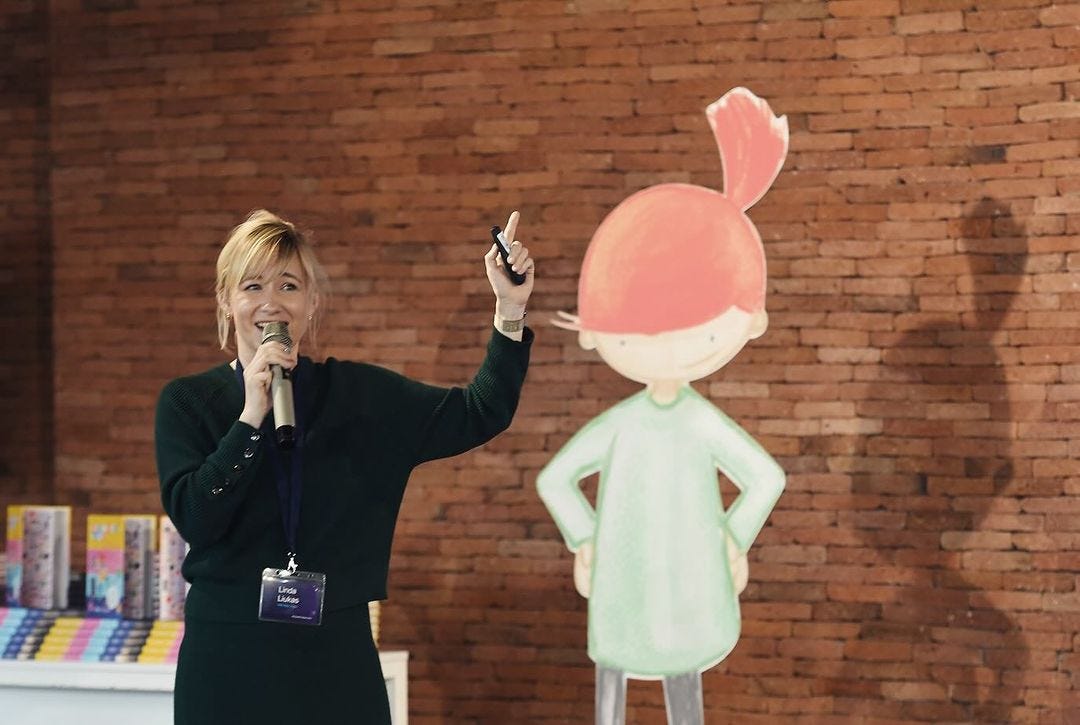
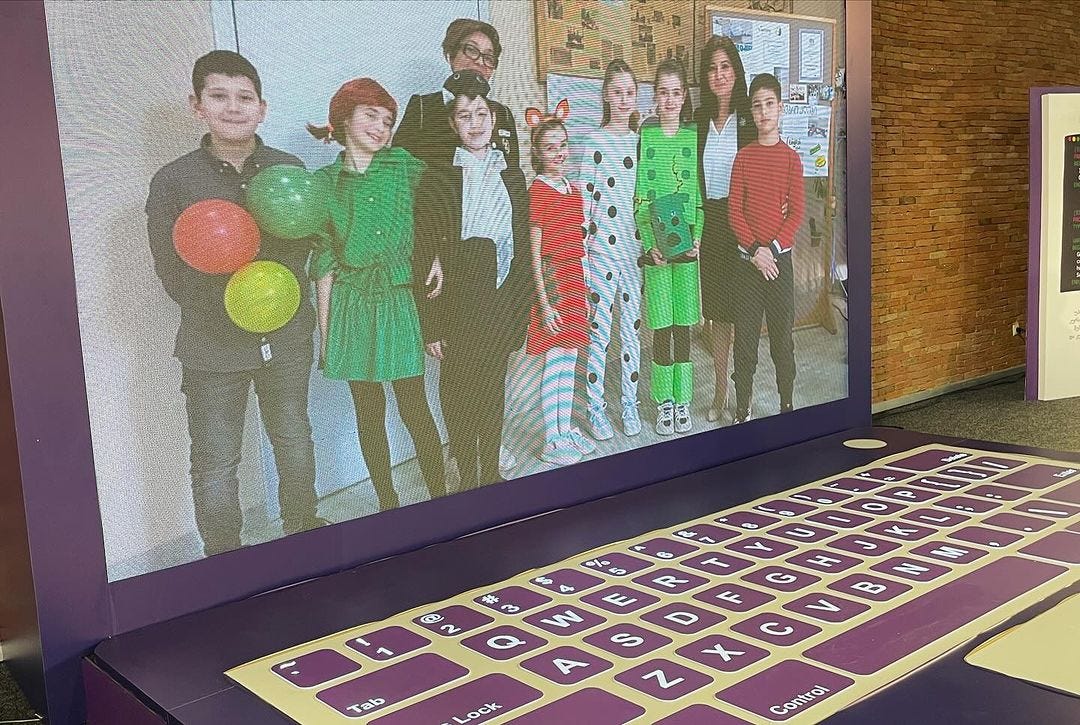
These kids were the coolest: they had done a play on the first Ruby book. I especially love the expression on the child who plays Ruby!