No. 39 — Summer books 🔖 Read your way through 🏫 Library.json
PageRank for books
My name is Linda. I write a bi-weekly newsletter about computer science, childhood and culture - and there are 9 599 of you listening. If you enjoy this issue, please share it with anyone you think may find it useful.
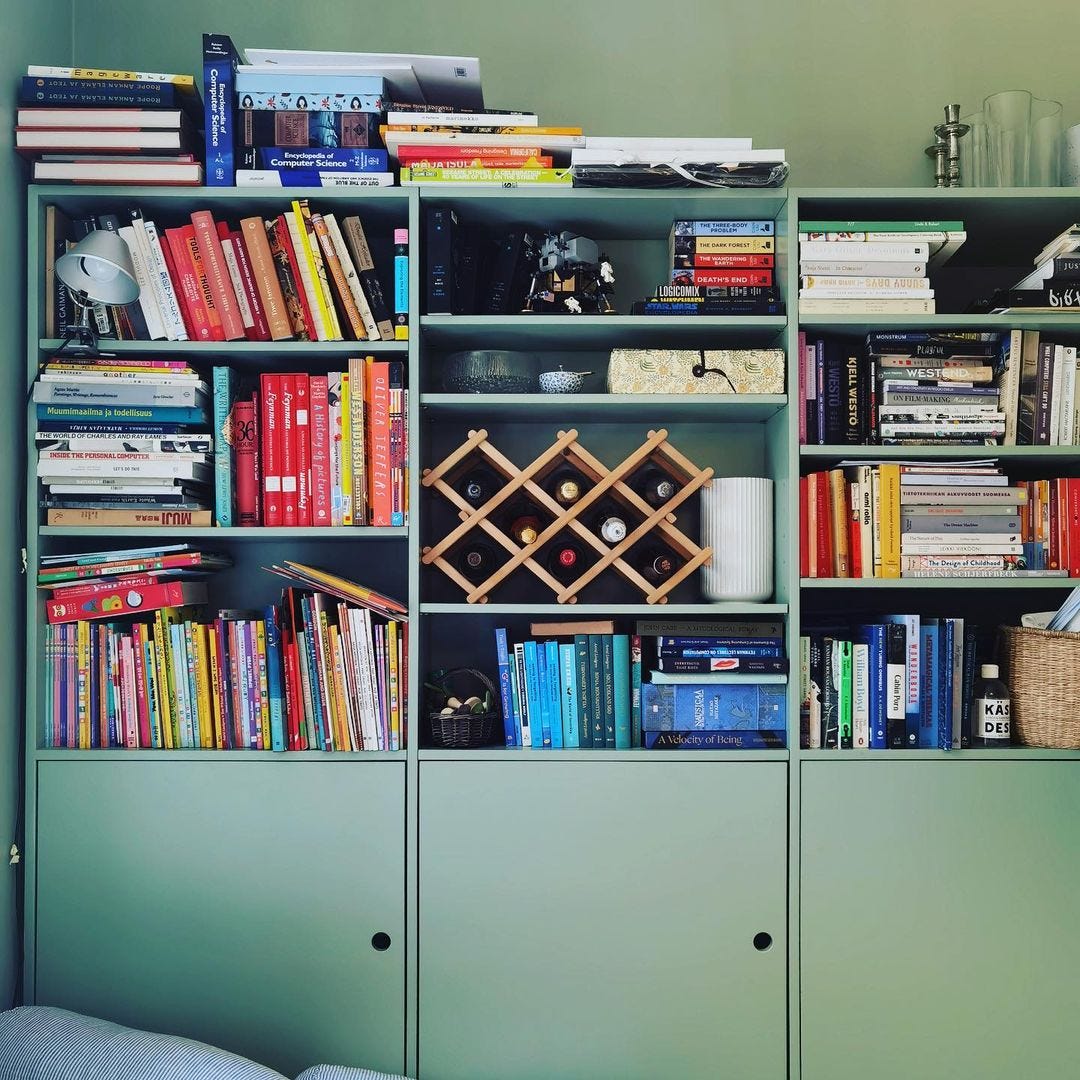
Book discovery is a problem a bookstore owner and a computer scientist have very different approaches to. Caring about both, two thoughts:
On bookstores. Last week McNally Jackson posted a summer reading matrix with two axes: fast/slow and slim/epic. I rarely find future reading based on an algorithm, but from lists like these. And I like the categories better than the traditional genres of historical fiction, nonfiction, biographies, or the like. The matrix made me think of this quote from Teju Cole:
"I also find the stern distinction between fiction and nonfiction odd. It’s not at all a natural way of splitting up narrated experience, just as we don’t go around the museum looking for fictional or nonfictional paintings. Painters know that everything is a combination of what’s observed, what’s imagined, what’s overheard, and what’s been done before. Is Monet a nonfiction painter and Ingres a fiction painter? It’s the least illuminating thing we could ask about their works." - Teju Cole In Conversation With Aleksandar Hemon
I like how a reader’s taste or a publisher list form clusters of books that speak to one another. Especially useful is when someone finds a specific yet permissive theme: easy reads, with literary flourishes or books with giant, possibly magical libraries. And then there are publishers like 50 Watts, whose entire catalog I could buy.
Then, a thought on computer science.
Most book recommendation algorithms are plain boring: they know how to suggest things you already know you like. The recommendations lack nuance as they are often based on ratings of other readers - and if anything, a book runs away from a one-dimensional star ratings. (I’ve all but stopped rating books). However, books contain a lot of data and that’s what computers love.
What if there was PageRank for books, so instead of sales numbers or reader ratings the algorithm would look for acknowledgements and endorsements from agents, editors or other authors and surface unlikely connections? Or a k-means clustering algorithm for technology books none of my friends have read and that are over 50 years old? What if what Stephen Wolfram calls post-linguistic emergent concepts was let loose among a corpus of books and computers could help discover patterns on connections, turns of phrases or literary neighbours from books we humans can’t grasp due to our limited input speed?
I wish book discovery found a way to combine both human curation and the surprise of the unseen a computer can offer.
Meanwhile, of the 52 books I’ve read this year, I decided to veer more on the human curation side: inspired by the article on reading lists of pairs of books I offer eight recommendations, or four pairs.
Portraits: John Berger on Artists by John Berger | Cloud Cuckoo Land by Anthony Doerr
Portraits was maybe my favorite book of the year so far. It’s a collection of essays on art history that are both subjective and sharp. It shares the same quality of timelessness and power of a story as Cloud Cuckoo Land does.
A Bigger Message: Conversations with David Hockney by Martin Gayford and David Hockney | Wonderworks: The 25 Most Powerful Inventions in the History of Literature by Angus Fletcher
Both books felt like discussions (the other more formally than the other) and included a wink in the eye kind of curiosity.
To Paradise by Hanya Yanagihara | Ways of Being: Beyond Human Intelligence by James Bridle
Bridle’s book on nature and technology was love at first read. It’s sincere, searching and forgoes easy answers. Yanagihara was the kind of sweeping (literary/science) fiction that pairs beautifully with it.
Sea of Tranquility by Emily St. John Mandel | When We Cease to Understand the World by Benjamín Labatut
Both books have a quality of dancing, light, quick, all over the lines in terms of genres.
Books read in 2022
(Some of the linked books lead to Bookshop.org and I earn a small commission each time someone uses the link to purchase a book.)
January
The Wallcreeper by Nell Zink
Life’s Edge: The Search for What It Means to Be Alive by Carl Zimmer
Convenience Store Woman by Sayaka Murata
A Bigger Message: Conversations with David Hockney by Martin Gayford and David Hockney
Eleanor Oliphant Is Completely Fine by Gail Honeyman
The Pattern on the Stone: The Simple Ideas that Make Computers Work by William Daniel Hillis
To Paradise by Hanya Yanagihara
Jaakobin portaat by Joel Haahtela (FI)
Wonderworks: The 25 Most Powerful Inventions in the History of Literature by Angus Fletcher
Lincoln in the Bardo by George Saunders
February
Red Milk by Sjon.
When We Cease to Understand the World by Benjamín Labatut
Smile: The Story of a Face by Sarah Ruhl
Portraits: John Berger on Artists by John Berger
The Buried Giant by Kazuo Ishiguro
Vi for upp med mor by Karin Smirnoff (SWE)
Valtakausi by Jenni Toivoniemi (FI)
Uncomputable: Play and Politics in the Long Digital Age by Alexander Galloway
The Anthropocene Reviewed by John Green
Rajattomuuden aika: kertomus lapsuudesta by Eeva Kilpi (FI).
March
The Life of the Mind by Christine Smallwood
The Paris Apartment by Lucy Foley
Aurinkokissan vuosi by Merete Mazzarella (FI)
Mahdottomia oletuksia by Juuli Niemi (FI)
Talvisodan aika: lapsuusmuistelma by Eeva Kilpi (FI)
Välirauha, ikävöinnin aika by Eeva Kilpi (FI)
April
Crashed: How a Decade of Financial Crises Changed the World by Adam Tooze
Sea of Tranquility by Emily St. John Mandel
Jatkosodan aika by Eeva Kilpi (FI)
The Enchanted April by Elizabeth von Arnim
May
Whole Earth: The Many Lives of Stewart Brand by John Markoff
Väylä by Rosa Liksom (FI)
The Odd Woman and the City: A Memoir by Vivian Gornick
Kuninkaan Anna by Ulla-Lena Lundberg (FI)
Everything in Its Place: First Loves and Last Tales by Oliver Sacks
Cover Story by Susan Rigetti
June
Cloud Cuckoo Land by Anthony Doerr
Ways of Being: Beyond Human Intelligence by James Bridle
Grown Ups by Marie Aubert
Pure Colour by Sheila Heti
The Netanyahus by Joshua Cohen
Debt: The First 5,000 Years by David Graeber
Radalla by Iida Sofia Hirvonen (FI)
How to Do Nothing: Resisting the Attention Economy by Jenny Odell
Art and Creativity in Reggio Emilia: Exploring the Role and Potential of Ateliers in Early Childhood Education by Vea Vecchi
The Magician by Colm Tóibín
Linea Nigra by Jazmina Barrera
July (so far)
Livets tunna väggar by Nina Burton (SWE)
Thread Ripper by Amalie Smith
Secret Knowledge: Rediscovering the Lost Techniques of the Old Masters by David Hockney
Reap3r by Eliot Peper.
The Signature of All Things by Elizabeth Gilbert
Linked List
Read your way through a city is a New York Times (paywalled) series I’ve been loving. In it, writers give recommendations on books to advance read, bookstores to visit, literary pilgrimages and places to read in a city Leila Slimani on Paris and team Lars Kepler on Stockholm.
Tom Critchlow has outlined an interesting proposal called library.json. I, too, fell in the category of people who used to think book discovery ought to be a product someone "should build”. But maybe it’s a protocol. I’ve also been reading through some old RFCs and admiring the way giant and resistant things were built through protocols, clear communication and outlining ideas (related, Specifying Spring ‘83), not fancy UX.
Everyone has been gushing about Book Exploder and of course I’m eagerly awaiting for the podcast to launch in August, Susan Orlean and the process of breaking down some iconic books.
Classroom
I’m hoping to surface and share stories from all of you and I’d love to see your creations! Here are a few teachers using Ruby in creative, fun and inspiring ways.
Stories like these.. When a book inspires creation, like a little boy making a game.
Go Iowa! Can’t wait to see what else is in the teacher kit.
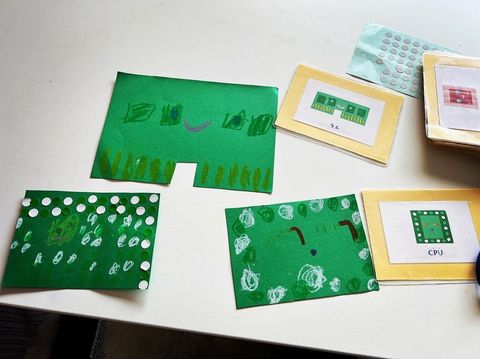
These hardware drawings somehow always make me happy.