No. 127 — Colour-greedy ⫶ Neural geometry ⫶ Scaffolding in the air
You have enough in your head to sort out
My name is Linda. I write a bi-weekly newsletter about computer science, childhood, and culture.
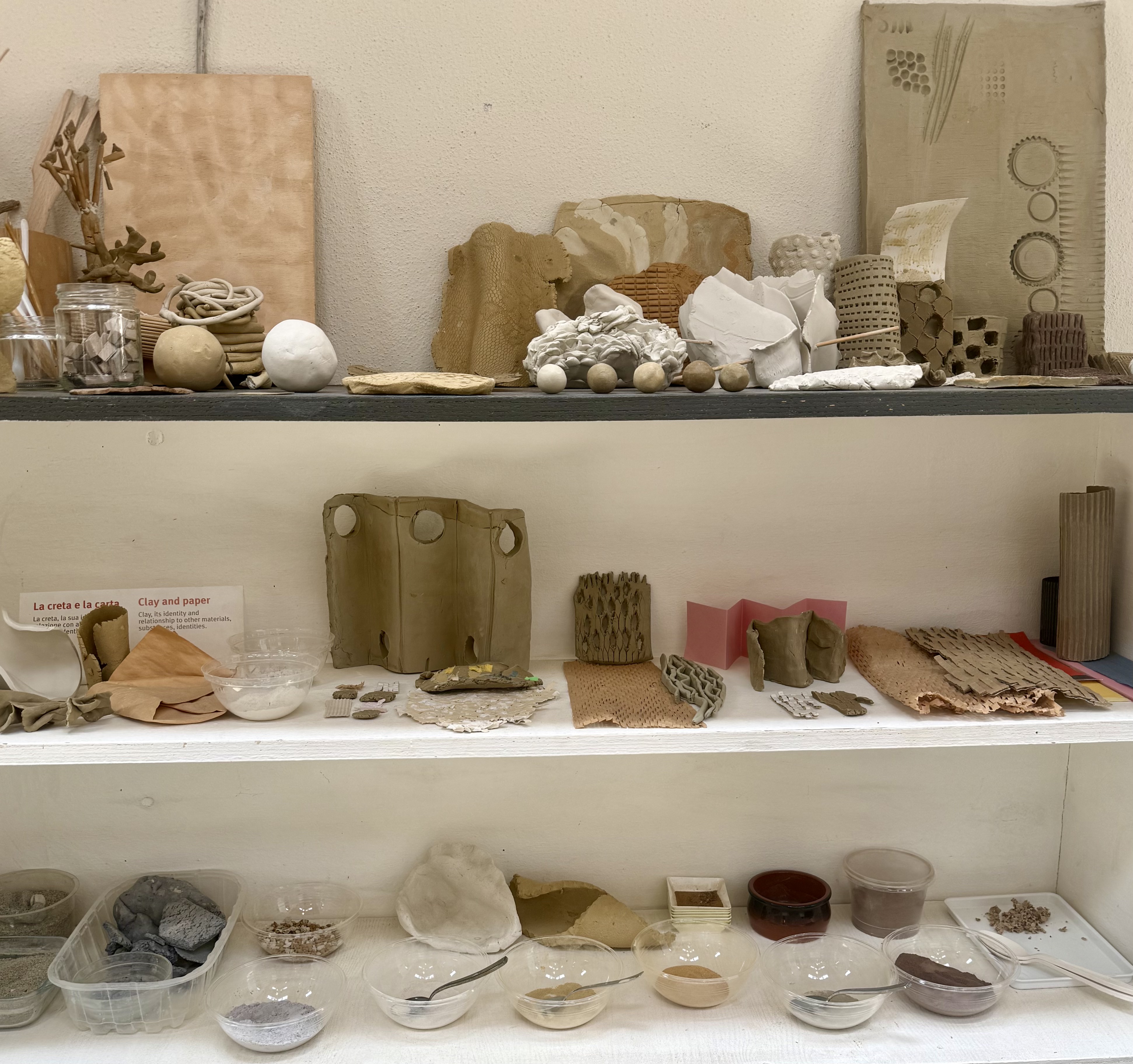
Hi from Reggio Emilia, Italy. I was last here almost ten years ago (and loved/all/of/it) and it feels necessary to be back. I’m a completely different person from a decade ago, a lot in my practice has changed - and yet the ideas of Reggio feel more relevant than ever.
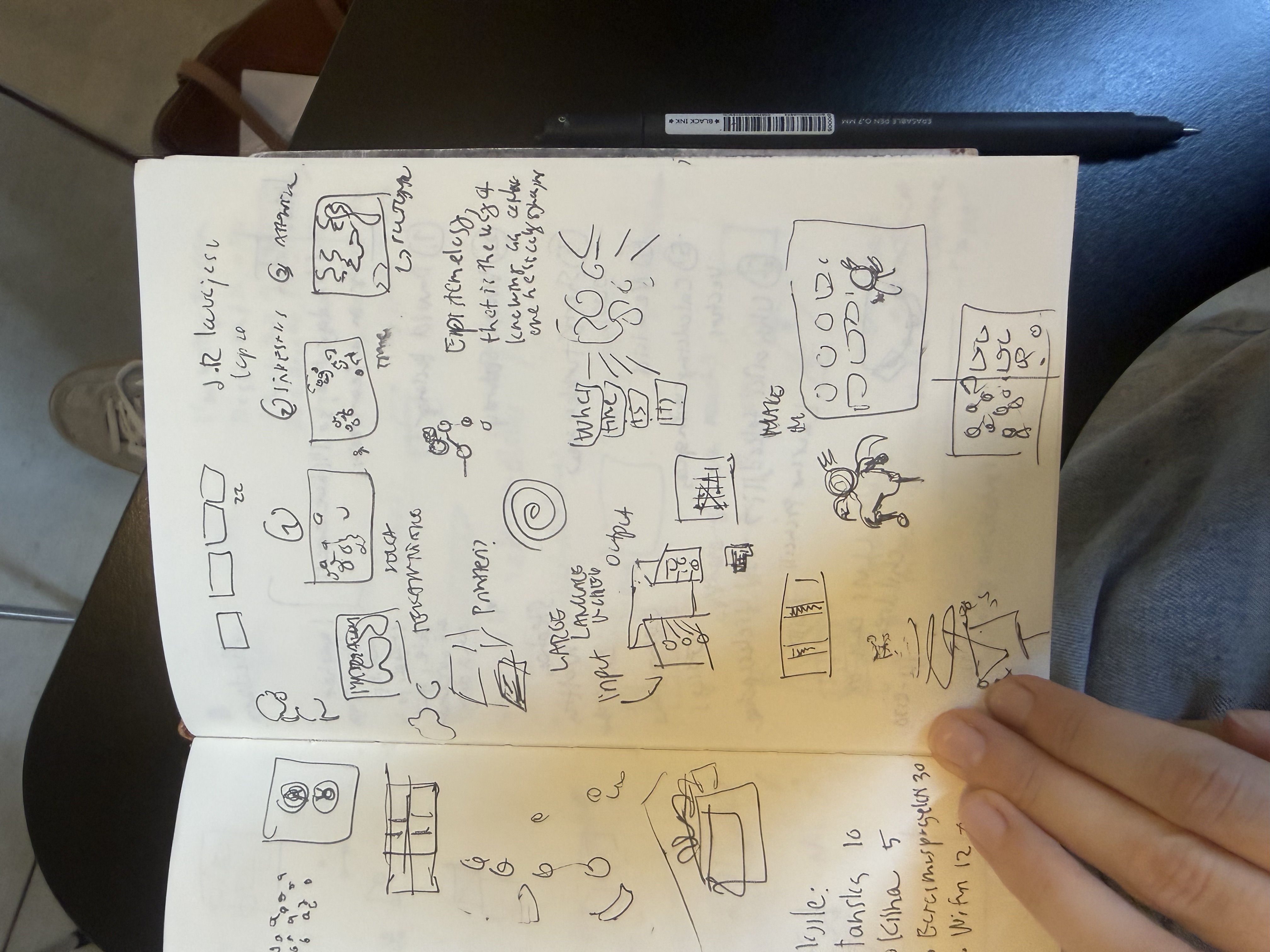
I’m sure I’ll have more to say in a few weeks, after I’ve had a bit of time to let everything percolate. But already now I can feel how much I need to think alone in a space with other people. I’ve never understood people who get ideas in the shower, but put me in a room with lectures on interesting but not-too-difficult topics and watch my thoughts wander in very productive ways. (It doesn’t work with podcasts. I need a real room to sit in, some kind of constraint.)
1.
David Hockney passed away last week. He is surely the artist who has most shaped my way of seeing.
In 2018 I was invited to speak at the NGV in Melbourne, as part of a David Hockney exhibition. After that I’ve seen countless exhibitions and read almost all the books about him. What a funny, serious, colour-greedy man with the widest curiosity of anyone I've known. Thank you for all the thoughts.
2.
“When you’re very young, you wish to be in the middle of a lot of activity because it’s stimulating to you. You are adding to it and taking out of it. But there’s a point in life where you don’t need that crowd to do it. You have enough in your head to sort out.”
- David Hockney, Rolling Stone, December 1990
3.
Here is a collection of my own favourite stories on Hockney:
No. 29 — David Hockney 👀 But to see like this 🐈 They All Saw a Cat. The Orangerie exhibition on Normandy (one of the first exhibitions I saw after arriving to Paris), Hockney’s photographic mosaics as a way into how computers piece together visual information, and a Reggio Emilia classroom exercise on perspective.
No. 83 — Look longer ⫶ Remake old Masters ⫶ Zucchini jam. Hockney paired with Piero della Francesca at the National Gallery. Copying as a way to learn. “Old, not dead.”
No. 99 — The Force of Spring ⫶ Paris Bees ⫶ Curiosity Muscle. Hockney knew something about Scandinavian spring.
No. 102 — True to Life ⫶ Polyester ⫶ All the surfaces of things. Hockney 25 at FLV and my top recommendations for Hockney-in-dialogue books.
No. 103 — Diagonal Movements ⫶ Pathfinder ⫶ Move our arms and legs at the same time. Musical tribute to Hockney at FLV. Wagner Drive. Four-hands piano.
And this makes me realise I’ve never written about the Hockney-Falco thesis (the hypothesis that optical technologies helped with the the sudden increase in realism of Renaissance painting), or how he sparked my interest in tapestries..
4.
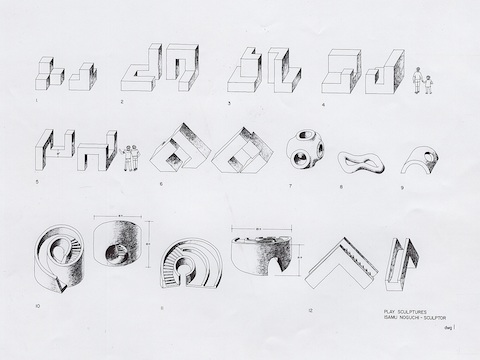
“I think of playgrounds as a primer of shapes and functions; simple, mysterious, and evocative; thus educational.”
— Isamu Noguchi, on Drawings for play equipment by Isamu Noguchi, 1966–1976
5.
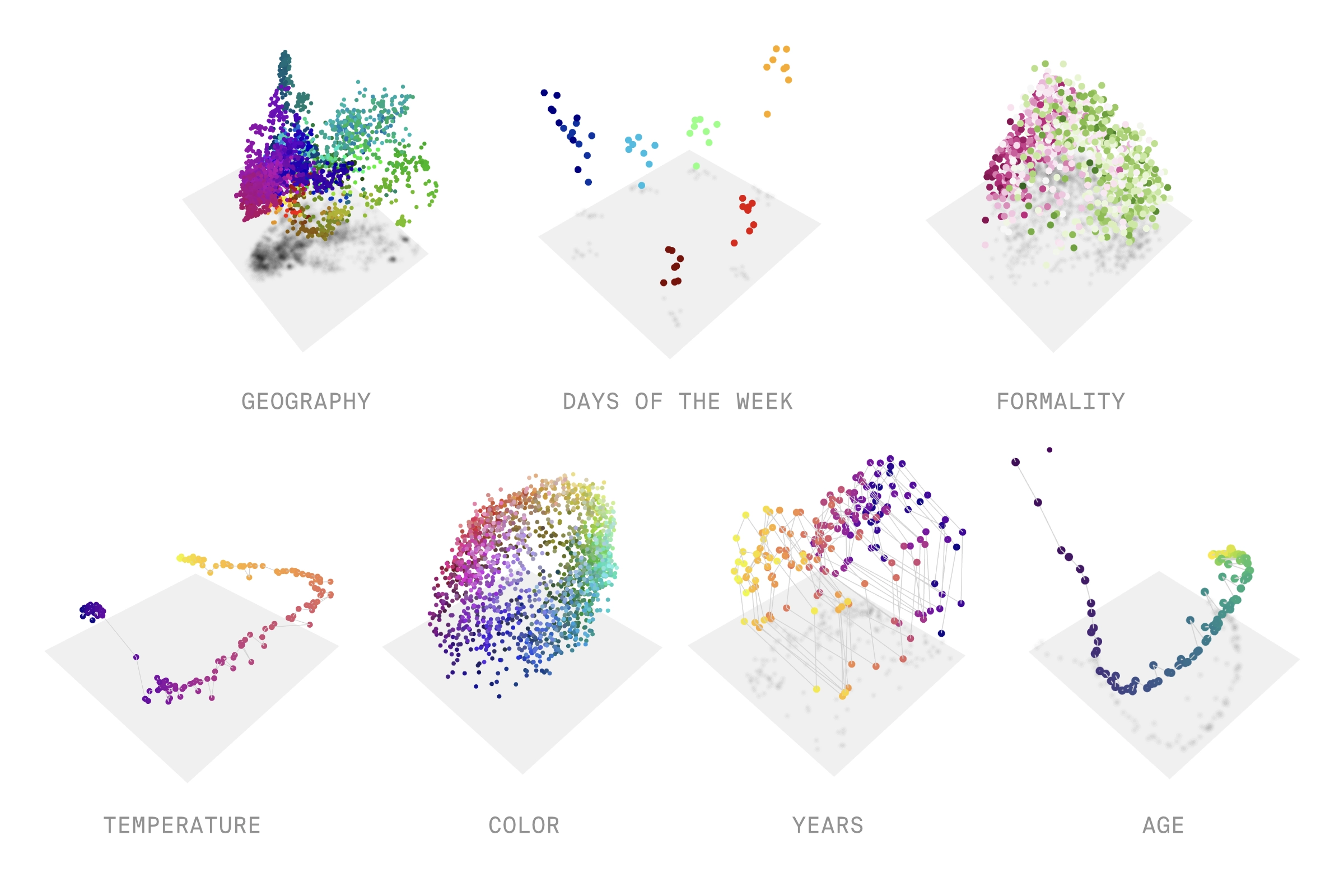
Speaking of shapes. One of the most tingly graphs I’ve seen recently is from Goodfire, a company trying to understand what happens inside neural networks. They mapped the concepts a language model has learned and found a geometry, actual spatial structures.
So: inside a language model, the months of the year form a circle. Rhyming words form curves, with perfect rhymes at one end and slant rhymes trailing off the other. Colors arrange themselves on smooth surfaces by hue and saturation. Isn’t that wild?
I keep thinking about how in a hundred years we might teach children geometry through words instead of graph paper, in higher dimensions, not grids, scaffolding in the air. It feels more intuitive than it should. Children already feel that words have distances. That whisper is closer to murmur than to scream. They’ve been doing geometry all along.
6.
One of my favorite French words is la vulgarisation scientifique. It means popularising science, but to my ear it sounds like you're making science crude, which is unfortunate when it's your job description. The Latin root (vulgus, the common people) split in two. French kept the generous reading: bringing knowledge to the people. English kept the snobbish one.
This Saturday at 10 AM, I'll be at VivaTech with Amélia Matar and a bunch of kids, vulgarising science: showing young children how large language models and image generators work, while their parents listen to a research-backed discussion on what generative AI is doing to children's brains. If you're in Paris, come!