No. 126 — Five Kinds of Memory ⫶ Dog Days ⫶ Hold your ground
Magnificent and musty
My name is Linda. I write a bi-weekly newsletter about computer science, childhood, and culture.
The heat landed and left Paris. I learned that the word canicule, or heatwave, takes its name from the Latin canicula or little dog. The arrival of Canis Majoris, the Dog Star or Sirius in the night skies marked the start of the hot weather. Traditional dog days in Rome ran from July 3 to August 11th, which is when Sirius rose with the sun. Now, the seasons are changing earlier, but the words remain.
1.
I was on a podcast recently, talking about three things France gives children that AI can't. These are conflict, taste, and audacity.
First: conflict. At the playground, French children can be absolute nightmares, fighting, pushing, and taunting each other. My Finnish instinct is to smooth it over. Instead I've learned to say: tiens bon, hold your ground. Meanwhile, every AI my son meets thinks everything he says is brilliant. Healthy appetite for conflict will serve him well.
Second, taste. Not the cliché, but the habit of asking a five-year-old why she likes this painting, this bread, this building and not that one. At least in the early years, the school encourages children to have a reaction to art and to trust that reaction. It turns out to be a skill one needs when a machine can produce anything and it's up to you to describe what should exist.
And finally, audacity. At the new Fondation Cartier, five steel floors of two hundred and fifty tonnes each move up and down on pulleys inside an old Haussmann façade. Tell a Finnish engineer "we're going to make the floors move" and she'll say it sounds complicated. A French engineer has enough Eiffel in his blood to make beautiful, complex things in the world.
All in all, I think a child who grows up among things made more beautifully than necessary grows up believing that big things are still possible.
2.
Said podcast here! Svenia and I talked about Reggio Emilia, playgrounds, and software-shaped thinking. I'm going to Reggio in a few weeks, very excited for the time I'm getting to spend with other educators.
3.
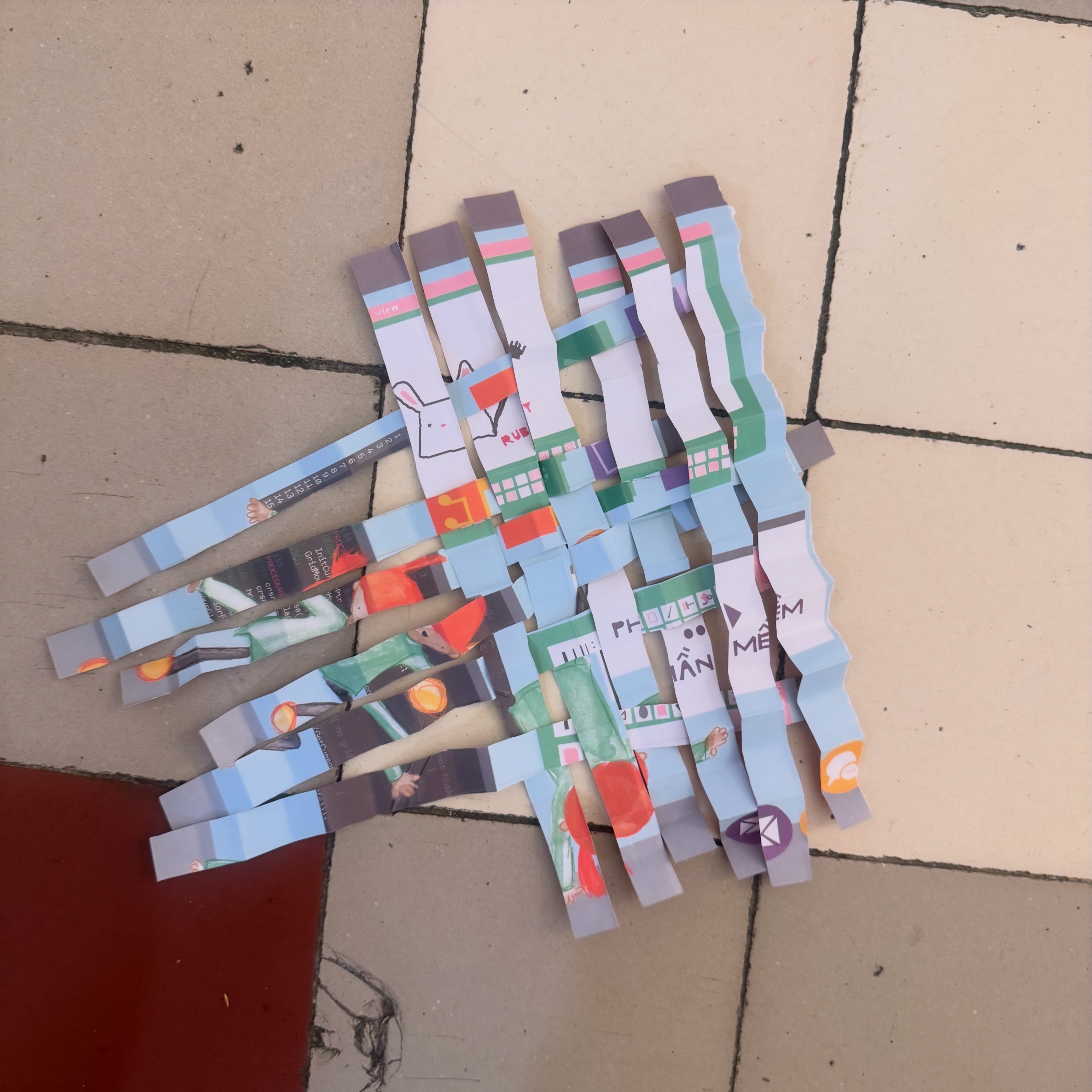
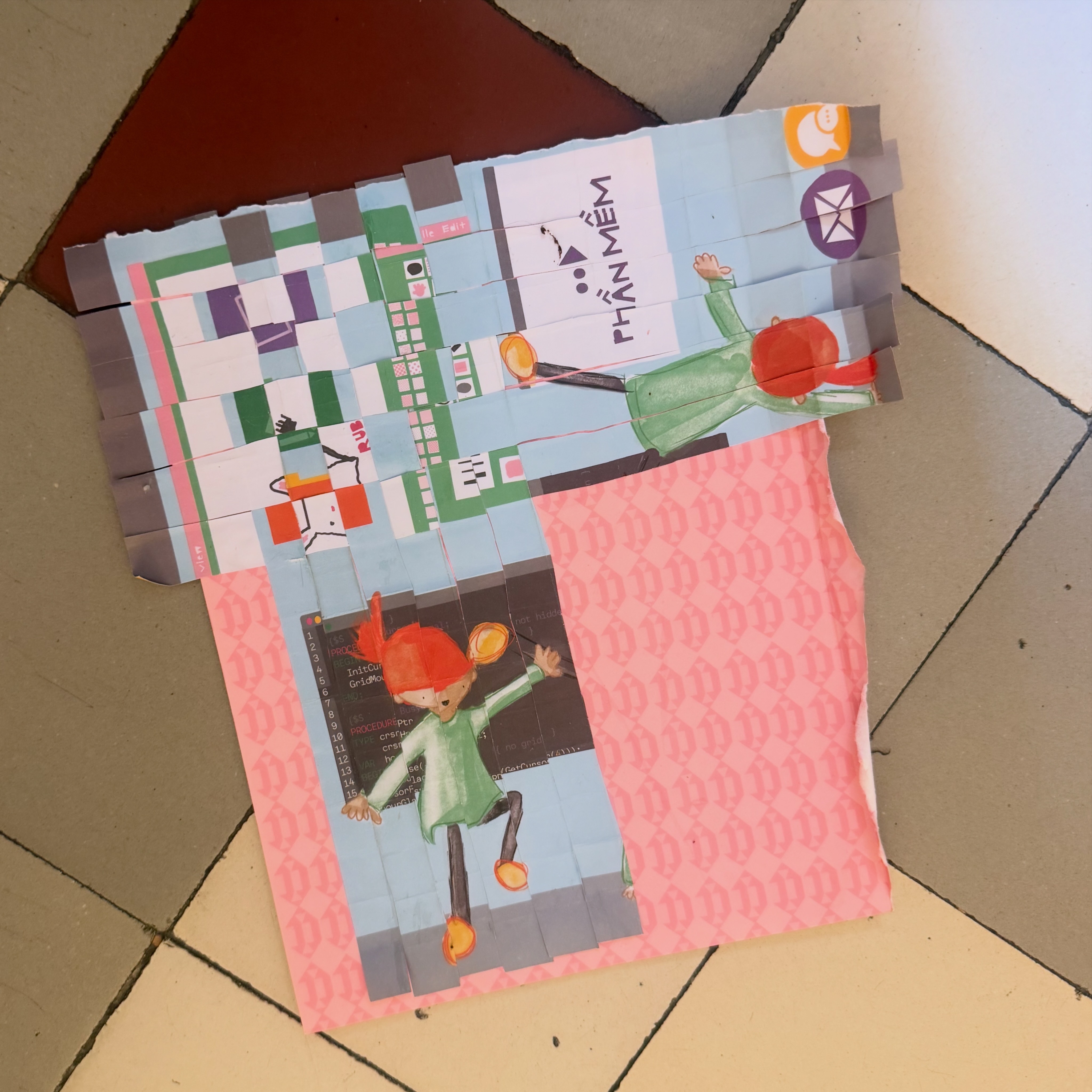
The photos for this edition are from a few experiments I've started for the Hello Ruby book on large language models. I want to use as much collage, old books, and recycled material in the illustrations as I can, so I found the most magnificent and musty little shop in the 12th arrondissement, called La Galcante, which sells old newspapers, books, and magazines. Picked these two.

4.
"Sensory memory lasts about two hundred to five hundred milliseconds after perception. Then it starts to degrade. Working memory, or short-term memory, allows recall for a period of several seconds to a minute. Long-term memory can store larger quantities of information for a longer duration, potentially until the end of life. It may be divided into procedural memory, used in learning motor skills, and declarative memory, used in conscious recall. Declarative memory may be further subdivided into what scientists call semantic memory, which concerns facts taken independent of context, and episodic memory, which concerns personal experiences that occurred at a particular time and place."
- Ongoingness: The End of a Diary by Sarah Manguso.
I'm working on my summer reads edition (here's 2022, 2023, 2024 and 2025), but this was such a satisfying book: it is about a diary Manguso kept for twenty-five years that never appears on the pages, kind of a negative space, a diary made of the space around the diary. The memory parts are woven throughout the book and keep ringing in my head while reading about the cost of memory for AI companies, now at two-thirds the cost of the chip.
5.
By living through several heatwaves in the past five years I've learned to appreciate the funny relationship with air French have, as Shelby Champers nicely explains. And it serves me right: now I have a flu from the AC I ignorantly left running for too long! It's time to changer d'air, which means open the windows, but also to change my mind.