No. 108 — Reading brain ⫶ Rebuilding something new ⫶ The State of the Braid
now with more bird facts!
My name is Linda. I write a bi-weekly newsletter about computer science, childhood, and culture.
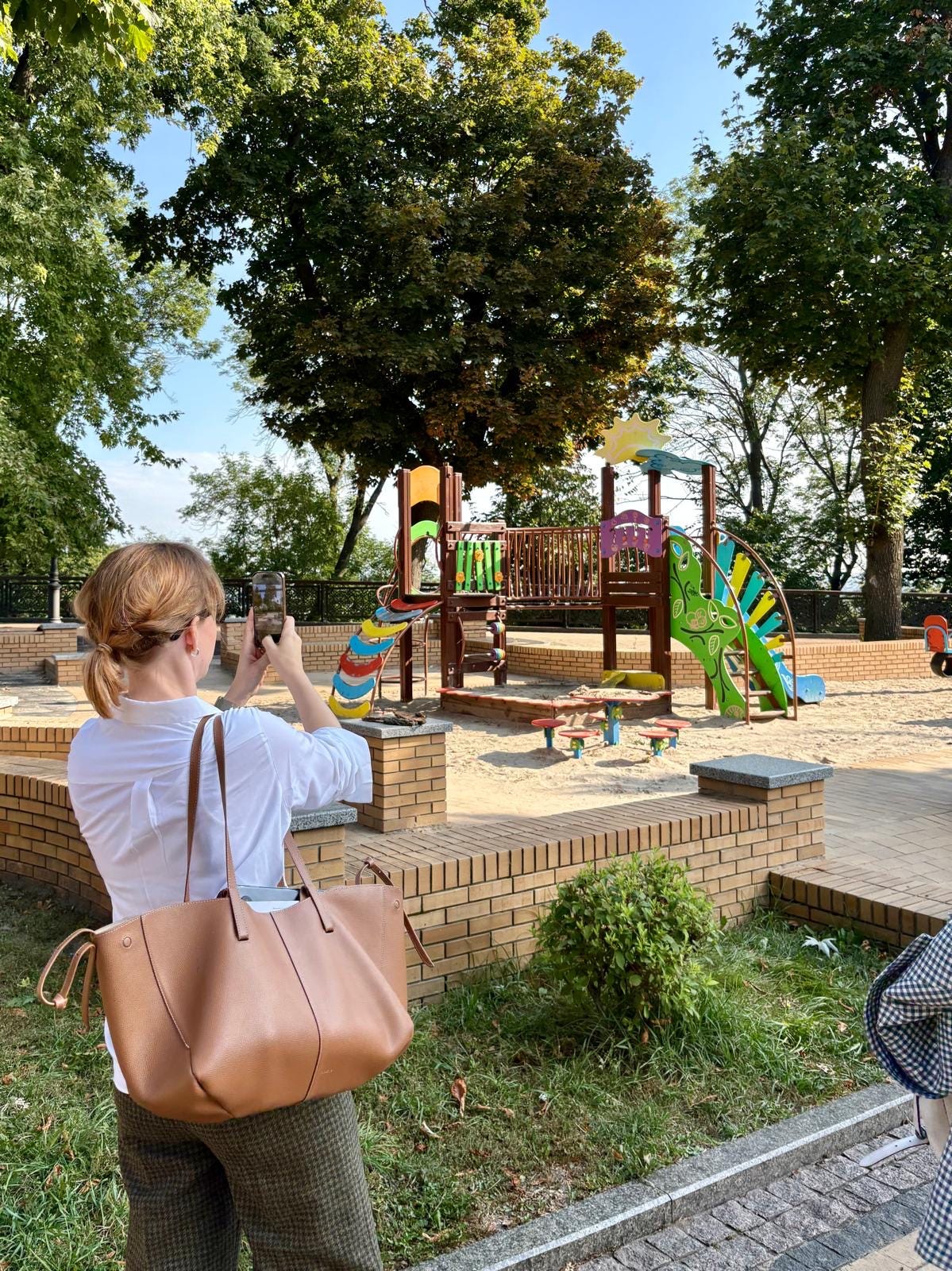
Every once in a while I find myself in the most surprising places. I spent last week in Kyiv, Ukraine.
Amid the ongoing war and blaring air alerts there was also a hopeful message of Ukrainian resilience, of beauty and of rebuilding something new. The train ride back to Poland took over twelve hours, plenty of time to think about how “Education Shaping the World” means investing in curiosity, care, and play already now. That’s work I want to be part of.
Slava Ukraini 💙💛
1.
I finished Proust and the Squid: The Story and Science of the Reading Brain by Maryanne Wolf. Her argument is that over centuries, reading rewired the brain into a “reading brain,” letting us enter the thoughts of others, absorb consciousnesses far from our own, and develop new cognitive capacities. At the end she turns to Socrates, who feared that reading only mimics knowledge.
Ultimately, the questions Socrates raised for Athenian youth apply equally to our own. Will unguided information lead to an illusion of knowledge, and thus curtail the more difficult, time-consuming, critical thought processes that lead to knowledge itself? Will the split-second immediacy of information gained from a search engine and the sheer volume of what is available derail the slower, more deliberative processes that deepen our understanding of complex concepts, of another’s inner thought processes, and of our own consciousness?
Socrates’ questions linger. I wonder what he would have said about the speed and ease of AI.
2.
A reader asked me, a bit paraphrased: If you were traveling through Scandinavia, looking at how technology, crafts, and childhood go hand in hand, what should you pay attention to?
So I made a small itinerary of museums, libraries and workshops. For each visit, I’d carry a handful of questions, like a lens for seeing Scandinavian culture.
Do the spaces want us to move together, or wander alone? How do they make belonging visible?
When technology appears, is it tool, toy, or companion? And how does it sit beside wood, clay, fabric, paper?
Who decides what happens: the grown-ups, the designers, or the children? How much can a child bend the rules, or write their own?
What is the shape of safety, and where does risk begin? Where are the pauses: the coffee, the fika, the pancakes waiting at the end?
How are the things children make treated? Are they hidden away, or displayed with the same dignity as adult work?
And can you feel the old Nordic promise, that everyone is welcome, that all can take part?
Finland
Käsityökoulu Robotti. After-school arts-and-tech craft school.
Arkki. Architecture lessons scaled to children’s bodies.
Annantalo. A house for children’s art and culture.
Oodi Urban Workshop. A library filled with tools (and seeing all the dads on paternity leave in Playground Loru!)
Sweden
Junibacken. A Story Train through Astrid Lindgren’s worlds.
Tom Tits Experiment. Machines that need many hands.
Denmark
H.C. Andersen’s House. Light, sound, fairy tales in motion. I love especially Ville Vau.
KU.BE. A building for movement! Love love this.
Dokk1. A library as public square, with a Monstrum playground.
Norway
Bitraf. A community makerspace.
Deichman Bjørvika. A glass library full of ramps.
What should I add?
3.
How big are our embeddings? I love Vicki Boykis’ clear way of writing about embeddings and dimensionality. (Dimensionality is a topic I keep circling back to. I remember when a few hundred dimensions felt sufficient. Now 768 is standard, and many models stretch to 4,096 and beyond.)
4.
The State of the Braid. This made me laugh: the wandering essay format that blends personal material with other themes: hawks, stars, water/swimming, Greek mythology. Or, like the article puts it: “the story of my breakup, now with more bird facts!”.
Braided non-fiction remains still my favorite genre.
5.
Internet phone book is in reprint. An annual publication for exploring the vast poetic web, now in collaboration with Metalabel. I wish I still had the little notebook where I wrote down the websites I liked, kept beside my childhood computer. It felt like a spell book.
6.
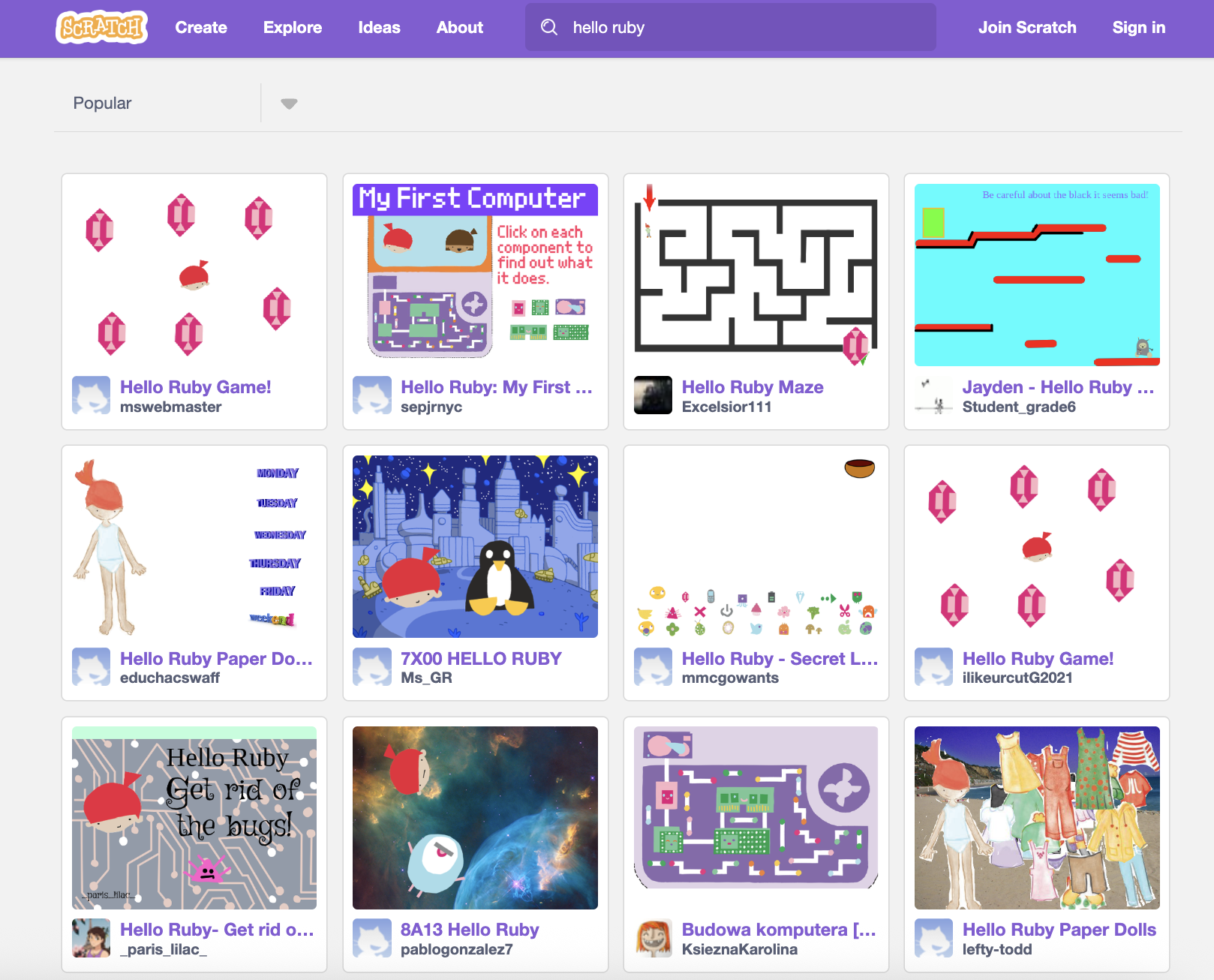
One of the little internet pockets I like checking from time to time: Scratch projects that use Hello Ruby sprites, stories or characters as inspiration. They are small, glitchy, and full of charm.