No. 104 — Summer books ⫶ Prony's computers ⫶ Interactions between frequencies
thinkers end up, wherever they may start, in botany
My name is Linda. I write a bi-weekly newsletter about computer science, childhood, and culture.
Yesterday was 14 Juillet here, France’s national holiday, and while trying to explain the fête to my toddler, I started to notice myself.. softening? I arrived in France feeling mostly indifferent, but by this fourth year something has shifted. I might even be a little enamored, with a crush for Paris?
Poudre de perlimpinpin delivered with a shrug. The pride in being débrouillard. And, of course, the unapologetic ease of j’ai la flemme déjà, can’t be bothered, not today. (A special thank-you to Lauren Collins’ wonderful Lettre Recommendée for helping me figure out it’s Macron’s oddball vocabulary I want to learn next in my French journey.)
That said, I’m really looking forward to being back in Finland for the entire month of August. If we haven’t seen each other in a while, maybe this is our chance.
At the end of this letter, you’ll find a list of the books I’ve read so far this year. There’s been some interesting discussion in Finland lately about how reading, rather than literature, has become the thing and how reading is just another piece of our performative online selves. I’m not entirely sure where I land on that. But I do love reading about what others are enjoying. So hopefully this feels more like sharing than showing off. Previous summer recommendations live here: 2024, 2023, 2022.
1.
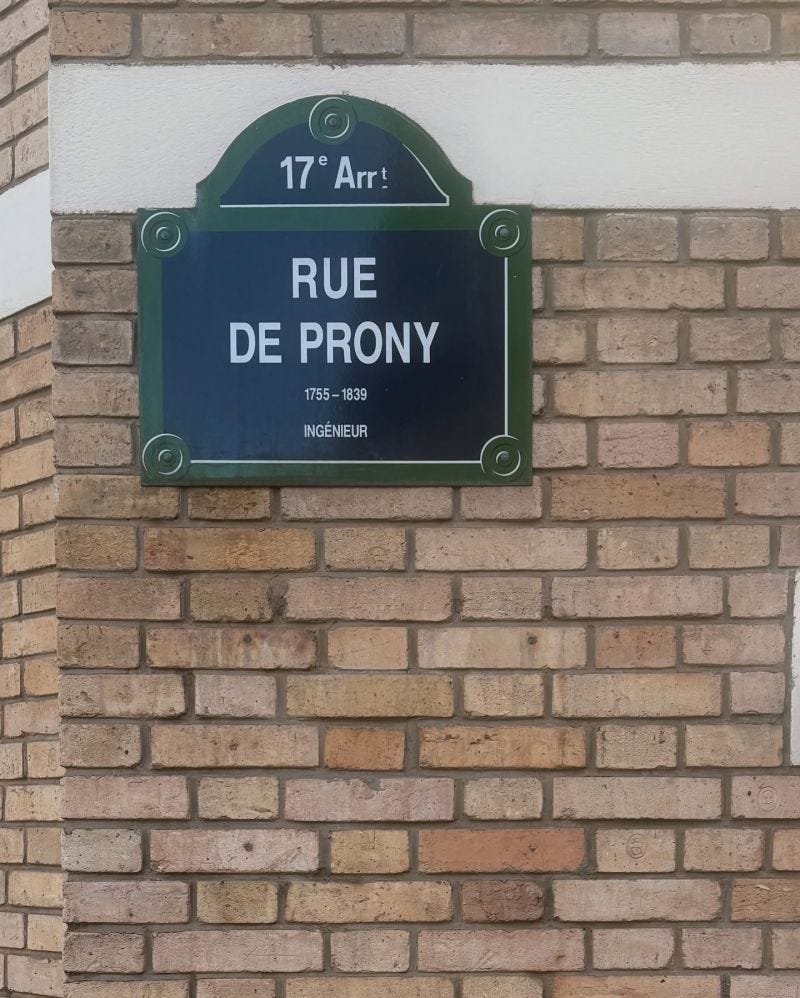
One of the more delightful rabbit holes I’ve followed: I live on Rue de Prony, which is named for mathematician Baron Gaspard de Prony (1755–1839).
After the Revolution the French National Assembly commissioned de Prony to organize production of huge logarithmic and trigonometric tables to help with a land-survey project. de Prony designed the formulas, mid‐level workers turned them into step‐by‐step instructions, and roughly ninety human computers executed the arithmetic.
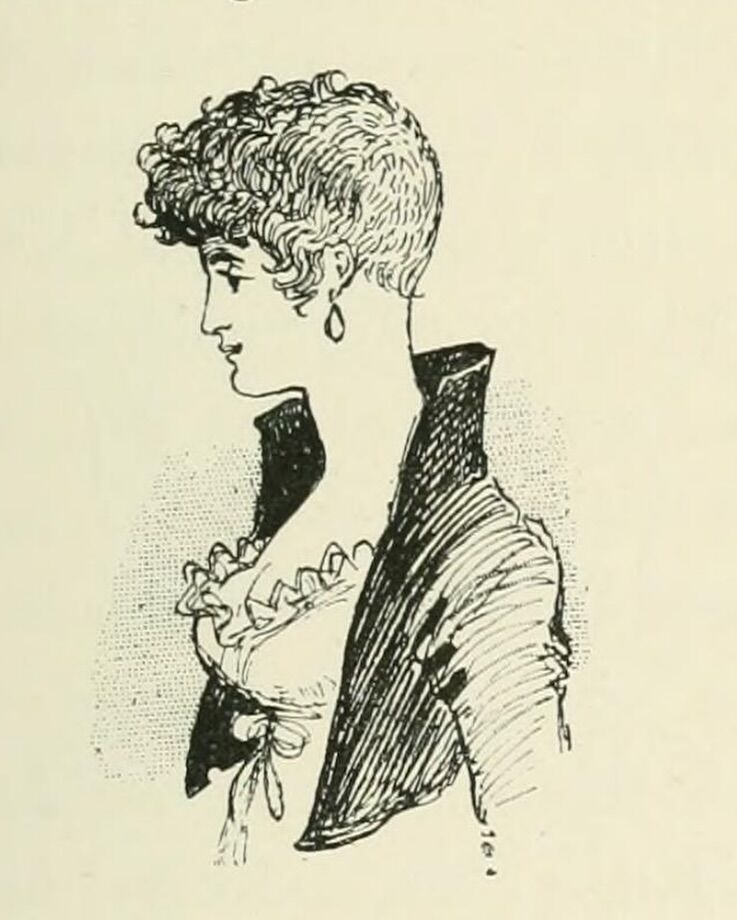
These human computers? Unemployed Parisian hairdressers, who found the post-Revolution fashion embracing simpler and cropped haircuts meant a lot less work than Marie Antoinette’s sky-high wigs. The hairdressers were used to meticulous and repetitive work and excelled at computing. de Prony’s factory of numbers eventually inspired Charles Babbage’s Difference Engine in 1822.
Rue de Prony: your unexpected landmark in the annals of computing (and pixie cuts).
2.
“I suspect that the real moral thinkers end up, wherever they may start, in botany,” writes Annie Dillard in Pilgrim at Tinker Creek.
I was reminded of this last week while watching Claire L. Evans’ talk How the Universe Thinks Without a Brain and reading Oliver Sacks’ account of Darwin’s original love of botany. Evans’ 20-minute talk is deeply impressive, worth watching for its fresh, sprouting ideas.
3.
This 30-minute Studio Ghibli Nature Loop premiered already in 2020, but is a keeper. It’s a compilation of all the best nature scenes in the classic Ghibli films and makes me notice many beautiful, peaceful moments anew.
4.
In Helsinki, I used to live right next to Tove Jansson’s atelier. When I started working with my current literary agency, the Moomin family kindly allowed me to visit. I remember being in complete awe of the bookshelves, wishing I could spend hours there just browsing. It felt like the kind of space where you didn’t even want to take photos, so I’m glad there are finally good ones out there now (though I wouldn’t mind a few close-ups of those shelves!)
5.
I love a good thread, the kind where one of the comments turns out to be from Terry Tao, Fields medalist, talking about metaphors in mathematics:
I think one reason why one cannot communicate most of one's internal mathematical thoughts is that one's internal mathematical model is very much a function of one's mathematical upbringing. For instance, my background is in harmonic analysis, and so I try to visualise as much as possible in terms of things like interactions between frequencies, or contests between different quantitative bounds. This is probably quite a different perspective from someone brought up from, say, an algebraic, geometric, or logical background. I can appreciate these other perspectives, but still tend to revert to the ones I am most personally comfortable with when I am thinking about these things on my own.
6.
My summer book recommendations for 2025, based on what I’ve read this year.
Fiction
Bel Canto – Ann Patchett. I’m slowly making my way through Patchett’s entire oeuvre, and this one feels especially right for summer. Graceful, suspenseful, and moving.
Once There Was – Kiyash Monsef. Marketed as YA, but it’s full of wonder and magic that easily spills over for adult readers too.
Dream Count – Chimamanda Ngozi Adichie. Well, loved this.
This Strange Eventful History – Claire Messud. Messud’s writing hooked me completely. In my opinion, the perfect summer book, there is a family, time, layers and life.
Technology / Business / Systems
Building SimCity – Chaim Gingold. Keep thinking about this on a weekly basis - on design, systems, and the playful roots of technology.
The Pacific Circuit – Alexis Madrigal. I loved the books structure and scope, weaving tech, culture, and politics into one big narrative.
The Magic of Code – Samuel Arbesman. I blurbed this earlier in the year, but it still easily tops my list of favorite technology books.
Memoir / essays / cultural reflections
Lessons from My Teachers – Sarah Ruhl. Ruhl’s writing has such tenderness, and I loved the glimpses into the theater world she offered me.
When in French: Love in a Second Language – Lauren Collins. A charming exploration of language, love, and identity.
Any Person Is the Only Self – Elisa Gabbert. Sharp, playful, and thoughtful in equal measure.
One Long River of Song – Brian Doyle. My first shimmery Doyle.
The Hockney Interviews – Hans Ulrich Obrist. I think I got more new ideas from this than from any other book this year
Finnish:
Kaarna – Tommi Kinnunen. A finely observed novel that lingers.
Reunamerkintöjä – Kadonnutta Eurooppaa etsimässä – Ville-Juhani Sutinen. A beautifully wandering travelogue in search of forgotten Europe.
Karkuteillä – Aura Nurmi. A fine debut, with Japan, videogames, motorbikes and softly strange encounters.
All Books read in 2025
(Some linked books lead to Bookshop.org, and I earn a small commission each time someone uses the link to purchase a book.)
January
Lehmä synnyttää yöllä by Pajtim Statovci
When in French: Love in a Second Language by Lauren Collins
Powerhouse by James Andrew Miller
Any Person Is the Only Self by Elisa Gabbert
The Magic of Code: How Digital Language Created and Connects Our World―and Shapes Our Future by Samuel Arbesman
Kaarna by Tommi Kinnunen
February
Lonesome Dove by Larry McMurtry
Send Nudes by Saba Sams
The Nvidia Way: Jensen Huang and the Making of a Tech Giant by Tae Kim
Once There Was by Kiyash Monsef
The Ministry of Time by Kaliane Bradley
March
Käräjät by Markus Nummi
Dream Count by Chimamanda Ngozi Adichie
The Life Cycle of the Common Octopus by Emma Knight
This Strange Eventful History by Claire Messud
April
The Pacific Circuit: A Globalized Account of the Battle for the Soul of an American City by Alexis Madrigal
Of Ants and Dinosaurs by Cixin Liu
Karkuteillä by Aura Nurmi
Sielunpiirtäjän ilta by Joel Haahtela
Three Days in June by Anne Tyler
Abundance by Ezra Klein
Building SimCity: How to Put the World in a Machine by Chaim Gingold
Kaskaat by Emmi-Liia Sjöholm
Reunamerkintöjä - Kadonnutta Eurooppaa etsimässä by Ville-Juhani Sutinen
May
Things Become Other Things: A Walking Memoir by Craig Mod
Where the Axe Is Buried by Ray Nayler
Les Yeux de Mona by Thomas Schlesser
One Long River of Song: Notes on Wonder by Brian Doyle
Mothers and Other Fictional Characters: A Memoir in Essays by Nicole Graev Lipson
June
Minun työni by Olga Ravn
Helsinki - Erään kaupungin historia by Henrik Meinander
Lessons from My Teachers: From Preschool to the Present by Sarah Ruhl
The Hockney Interviews by Hans Ulrich Obrist
The Twilight World by Werner Herzog
The Book of Goose by Yiyun Li
Rooftoppers by Katherine Rundell
William Blake and the Sea Monsters of Love: Art, Poetry, and the Imagining of a New World by Philip Hoare
Nelisiipinen lokki by Matias Riikonen
Motherhood by Sheila Heti
Bel Canto by Ann Patchett